I used to rely on WriteHuman AI for drafting natural-sounding articles and emails, but I can’t afford it anymore and need a no-cost option that’s just as human-like. I’m looking for recommendations on free AI writing tools that are reliable, safe to use, and good for SEO-friendly blog posts and professional messages. What tools are you using now that truly match or beat WriteHuman AI without charging a fee
- Clever AI Humanizer, my take after using it way too much
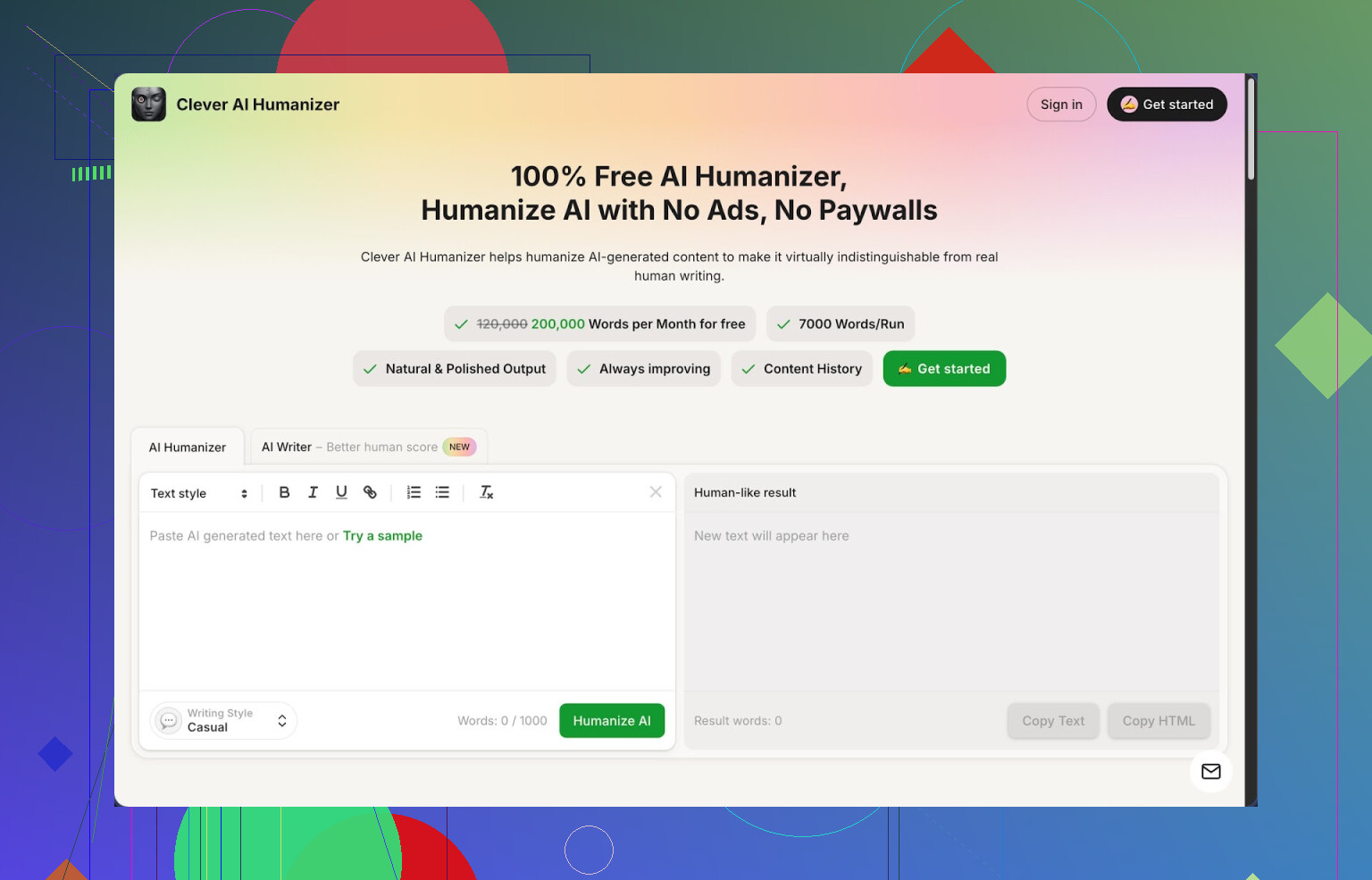
Link: https://cleverhumanizer.ai
I have been testing random “AI humanizer” stuff for a while, mostly because my clients started running everything through detectors and freaking out if anything looked synthetic. Out of the tools I tried, Clever AI Humanizer ended up being the one I kept open in a pinned tab.
Here is what pulled me in first:
- Free tier: about 200k words each month
- Up to around 7k words per run
- Three presets, Casual, Simple Academic, Simple Formal
- Built in AI Writer in the same interface
I threw three different longform samples at it using the Casual style and checked all of them in ZeroGPT. Each one showed 0 percent AI detection. I do not treat that as magic proof, but it got my attention, because a lot of paid tools fail that test on the first try.
If you write with AI a lot, you already know the main headache. The wording looks smooth but the rhythm feels off, and then detectors scream 100 percent AI even when you edit heavily. I had that problem with blog posts, Quora style answers, even emails for some paranoid companies. That is what pushed me into trying humanizers in the first place.
What the main humanizer module does
The core feature is simple. You paste your AI text, pick a style, hit the button, and wait a few seconds.
- Casual works best for blogs, social posts, replies, Reddit comments, that kind of stuff.
- Simple Academic keeps structure cleaner, good for essays or reports that should not sound like a teenager.
- Simple Formal is closer to basic corporate writing, but without too much fluff.
What helped me is the word limits. I pushed full articles, 4k to 6k words, and it handled them in one go instead of forcing small chunks. That matters when you want the tone consistent across a whole piece instead of stitched together from fragments.
I checked for meaning drift by comparing original vs humanized versions. In most runs the tool kept the core ideas intact. It changes phrasing, sentence length, transitions, but not the logical order. Some tools I tried earlier would randomly drop steps or distort arguments, so this was a relief.
One thing you should expect, the output often comes out longer than what you pasted in. It pads and rearranges things to break common AI patterns. For strict word count work, like school assignments, you might need to trim afterward.
Other modules I ended up using
I went in only for the humanizer, but the other tools built into the same site turned out useful when I needed to crank content fast.
- Free AI Writer
You feed it a topic and some guidance, it spits out a draft, and then you run that result through the humanizer again without leaving the page.
I used this combo for:
- 1k to 2k word blog posts about SaaS features
- FAQ pages for small local businesses
- First drafts of newsletter sections
When I checked those finished pieces in ZeroGPT and a couple of smaller detectors, they tended to show low or zero AI scores more often than when I wrote first in ChatGPT or Claude and then humanized. My guess is the internal pairing of writer plus humanizer has been tuned together.
- Free Grammar Checker
This one is boring but useful.
You paste any text and it fixes spelling, punctuation, and some clarity issues. Nothing fancy, but I used it as the last pass before uploading articles to WordPress.
Example workflow I used:
- Generate draft in some external AI or their AI Writer
- Humanize the draft
- Send the result into the Grammar Checker
- Then paste into CMS
For non native English clients, I ran their rough drafts through this tool to standardize language before editing manually.
- Free AI Paraphraser
This part rewrites text while keeping meaning intact.
I used it for:
- Reworking product descriptions so different pages were not duplicates
- Soft rewriting of older blog posts for reposts on other platforms
- Changing tone from stiff / corporate to more conversational
SEO people will find it useful for creating variations of similar content. I still rewrote headings and intros myself, but it sped up the middle sections.
How it all fits together in daily use
What made me keep using Clever AI Humanizer over the others was not one feature. It was the way everything sat in one simple workflow.
My typical routine for client content looked like this:
- Draft: either with their AI Writer or an external model.
- Humanize: pick Casual or Simple Academic depending on the target.
- Optional paraphrase: for sections that still sounded repetitive or close to source material.
- Grammar check: quick cleanup pass.
All on the same site, without managing credits or worrying about hitting a tiny daily cap. For bigger weeks I got close to the 200k word limit, but I never hit a hard wall.
What did not work perfectly
It is not magic. A few things to keep in mind from my experience:
- Some detectors still flag pieces as AI. ZeroGPT liked the output, but other tools online gave mixed results on longer content. Use more than one detector if your use case is critical.
- Word count inflation is real. Text comes out bulkier than what you start with. For exact limits, you need to edit.
- Occasionally, the tone drifts slightly from what I wanted. Especially on more personal writing. I sometimes had to re-inject my own phrases or shorten sections that felt too generic.
For anything high risk like academic submissions under strict anti AI rules, I would still do a lot of manual editing. The tool helps, but it is not a shield.
Where to read more or watch tests
They have a longer community review with screenshots and detector results here:
https://cleverhumanizer.ai/community/t/clever-ai-humanizer-review-with-ai-detection-proof/42
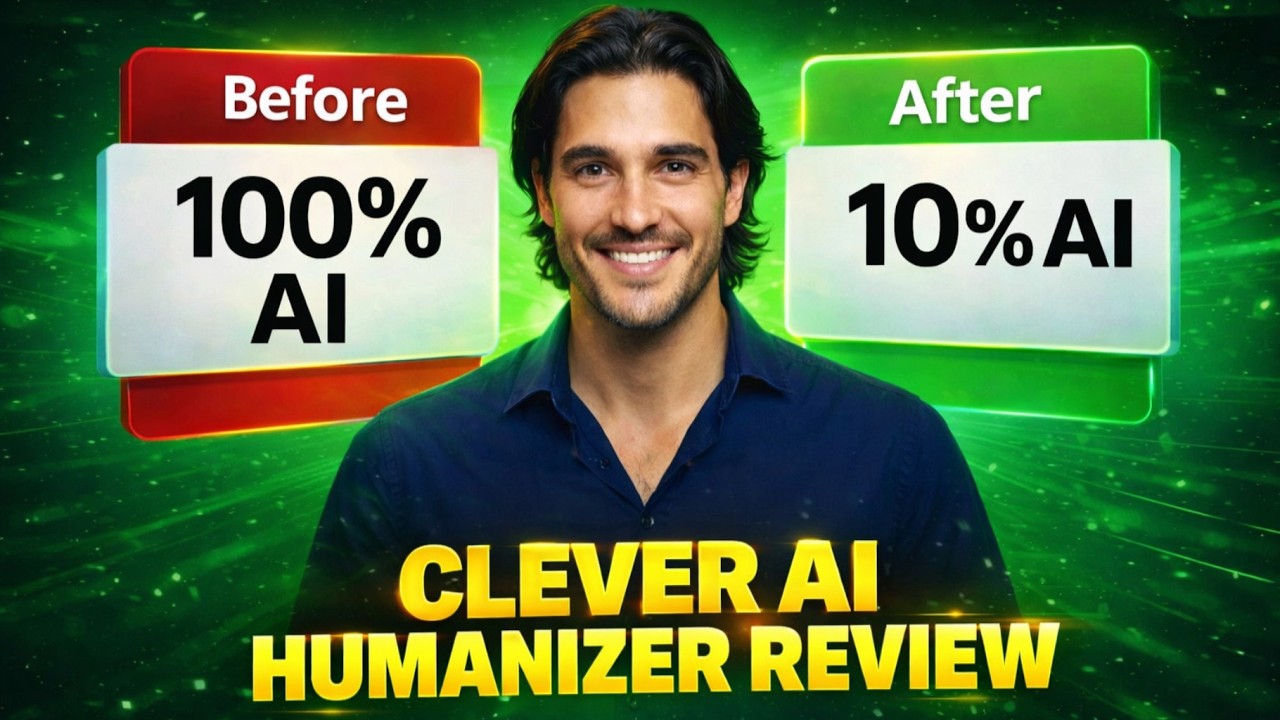
There is also a YouTube review that walks through the tool step by step:
If you want to see what other people are saying about AI humanizers in general, these Reddit threads helped me compare tools and workflows:
Best AI humanizers discussion:
https://www.reddit.com/r/DataRecoveryHelp/comments/1oqwdib/best_ai_humanizer/
Thread focused on humanizing AI output and tricks people use:
https://www.reddit.com/r/DataRecoveryHelp/comments/1l7aj60/humanize_ai/
If you write a lot with AI and you are stuck fighting detectors or weird robotic tone, this is one of the first tools I would try, mainly because you do not have to pay to stress test it on long pieces.
2 Likes
If you want a no-cost replacement for WriteHuman AI, you basically have 3 paths:
- Use a “humanizer” on top of free models
- Use a free model with smart prompts
- Mix both so your stuff passes quick sniff tests and AI detectors
Quick note, I agree with a lot of what @mikeappsreviewer said about Clever Ai Humanizer, but I think relying on one tool is risky if your clients or school keep changing detectors.
Here is what I would try.
- Clever Ai Humanizer as your “post-processor”
Use this when:
• You already wrote something with ChatGPT free, Gemini, etc
• You need it to read like a normal email or blog post
• The person on the other side runs content through ZeroGPT or similar
Why it helps:
• Handles long texts in one shot, so tone stays stable
• Has presets that fit common use cases, like Casual for blogs or Simple Formal for work emails
• Works well when you write your own rough draft first, then run it through to smooth rhythm and remove obvious AI patterns
I do not treat any AI humanizer as a detector shield. I treat it as a “make this sound less stiff” tool. For things like client outreach, newsletter intros, FAQ pages, this is enough.
- Free models that get you close to “human” without extra tools
If you want no extra step, use this stack:
• ChatGPT free
Best for shorter emails, outlines, and quick rewrites.
Prompt pattern that helps:
“Write a short email to [audience]. Tone: [friendly, direct, neutral]. 150 words max. Use short sentences. Avoid buzzwords. Include 1 concrete example.”
Then:
• Read it once.
• Remove generic phrases like “I hope this message finds you well”.
• Insert one detail that only you would say, like a date, tool name, or small opinion.
• Gemini free
Good for longer stuff, like 1000 word posts.
Prompt idea:
“Write an article on [topic] for [audience]. Use clear, simple language. Short paragraphs. Add 3 specific examples. Avoid filler.”
Gemini outputs still trigger detectors at times, so pair it with Clever Ai Humanizer when it matters.
- Free mix that works for articles
For natural sounding articles without paying:
Step 1: Outline with ChatGPT free
Ask for H2 and H3 headings only, no full text.
Example: “Give me an outline with H2 and H3 headings for a 1500 word article on [topic]. Target audience: [group].”
Step 2: Section by section writing
Take each H2, ask ChatGPT or Gemini to write only that part.
Tell it: “300 words. Simple language. Use 1 short example. No long intro.”
Step 3: Human edit pass
You:
• Cut fluff strings like “on the other hand”, “as a result”.
• Shorten long sentences.
• Add 1 or 2 opinions. Example: “This setting wastes time for small teams.”
Step 4: Run full text through Clever Ai Humanizer
Pick style based on target:
• Casual for blogs and newsletters
• Simple Formal for work docs and proposals
This cuts the obvious AI cadence that detectors look for.
- Emails that sound like you
For emails, you do not need fancy stuff.
Workflow:
• Write a bad first draft yourself, fast, with bullets
• Paste into a free model with a prompt like:
“Turn this into a clear email. Keep it short. Keep my original points. No corporate buzzwords.”
• If it still feels robotic, send it through Clever Ai Humanizer with Casual or Simple Formal.
You get speed from AI, tone from the humanizer, and your own details from the draft.
- Where I disagree a bit with heavy humanizer use
If you rely too much on any humanizer, your writing starts to feel samey across different topics.
What I do different:
• Keep intros and conclusions 100 percent manual.
Those are where your voice shows up the most.
• Use tools more in the middle sections where you explain steps or features.
• For high risk use, like graded essays with strict anti AI rules, I use AI only to brainstorm structure, then write the final text from scratch with the outline open.
- Quick setups by use case
Natural sounding emails, no budget:
• ChatGPT free to rewrite
• Clever Ai Humanizer Simple Formal
• 1 manual pass to insert specifics and dates
Blog posts:
• Outline in ChatGPT
• Draft per section in Gemini or ChatGPT
• Run full draft through Clever Ai Humanizer Casual
• Manual trim for length
Website copy:
• Paraphrase old text with any free paraphraser
• Humanize with Clever Ai Humanizer
• Read aloud once to catch weird lines
If you treat Clever Ai Humanizer as part of a small toolchain instead of a silver bullet, it fits well as a no-cost substitute for WriteHuman AI for both articles and emails.
If you’re trying to replace WriteHuman AI without paying, I’d split this into two buckets:
- tools to generate the text
- tools to “de-robot” it
@mikeappsreviewer and @kakeru already covered Clever Ai Humanizer really well, so I won’t rehash their workflows. I’ll just say: I actually disagree a bit with using it on everything. It shines most when you already have a good draft and just need to strip that “AI cadence” and make it pass quick sniff tests. If you lean on it for the whole pipeline, all your stuff starts to feel vaguely the same.
Here’s what I’d do as a no-cost WriteHuman substitute, without repeating their step-by-step:
1. Use multiple free generators instead of one “magic” tool
WriteHuman tried to be “type topic, get human-like article.” Free stack that gets close:
- ChatGPT free for structure, outlines, and short emails
- Gemini free for longer exaplanations or guides
- DeepL Write (free tier) or QuillBot’s free rewrite mode for style tightening
I rotate between them on purpose. Detectors often key in on specific rhythm patterns from a single model. Mixing sources + your edits already makes it harder to flag.
2. Then use Clever Ai Humanizer as a style blender, not a shield
This is where I part ways a bit with both of them. I don’t think of Clever Ai Humanizer as “make this undetectable.” I treat it more like:
- “Blend ChatGPT and Gemini tone into something consistent”
- “Take my slightly clunky manual draft and smooth it just enough”
If you’re writing emails or articles that have your ideas in them, this combo feels more natural than just humanizing a full auto-generated piece.
I also find the Simple Academic preset underrated for business content that needs to be clear but not stiff. Casual is nice, but it can read a bit too “bloggy” for serious clients.
3. Keep one part 100% you
This is where WriteHuman kind of spoiled people. It tried to do everything. For free setups, I’d keep:
- Intro and final paragraph fully manual
- Middle bulk assisted by AI + Clever Ai Humanizer
That alone massively increases the “this actually sounds like a person with opinions” factor. Detectors can still trigger, but humans reading it tend to trust it more.
4. Basic free workflow that doesn’t mirror theirs
- Rough out your points in bullets yourself
- Use ChatGPT / Gemini only to expand specific parts you’re stuck on
- Run the whole thing once through Clever Ai Humanizer as a light pass
- Read it aloud, delete any line you’d never actually say
You avoid the overprocessed vibe you can get if you follow heavy humanizer chains every time.
5. For emails specifically
Honestly, half the time you don’t even need an AI writer. Type the ugly version yourself, then:
- Paste into Clever Ai Humanizer with Simple Formal
- Trim anything that sounds too generic or overly nice
It ends up closer to WriteHuman’s “natural but polished” feel than just asking a free chatbot to “write a professional email” and sending it as-is.
So yeah: for a no-cost replacement for WriteHuman AI that still feels human, I’d use a mix of free chat models for the raw content and Clever Ai Humanizer as the final style layer, not as a one-button invisibility cloak.
If you want a no-cost “feels human” pipeline without copying what’s already been suggested, here’s a different angle: treat the tools as filters on top of your own thinking, not as ghostwriters.
1. Start with you, not the AI
Everyone is leaning heavily on generators. I’d flip that:
- Brain-dump your ideas in bullets.
- Write 1 or 2 scrappy paragraphs in your own natural voice.
- Only then bring in AI to tidy and extend.
This keeps your writing from having that “same texture everywhere” problem that happens when Clever Ai Humanizer, ChatGPT, Gemini and others all dominate the piece.
2. Use free models as micro-assistants
Instead of “write the full article,” try:
- “Rewrite this single paragraph to be clearer, keep my wording where possible.”
- “Give me 3 alternative sentences for this one line, same meaning, simpler.”
You basically use the free models as glorified sentence rephrasers. Less detectable, more you.
3. Where Clever Ai Humanizer actually fits
I agree with parts of what others said, but I think they lean a bit too hard on it as the final boss of humanization. I see Clever Ai Humanizer as:
- A style normalizer when your draft is a weird mix of manual text + multiple AI models.
- A rhythm fixer for emails and blog posts that sound slightly stiff but not terrible.
Pros of Clever Ai Humanizer
- Handles long texts in one run, which is rare for free tools.
- Presets (Casual, Simple Academic, Simple Formal) are actually distinct, not just renamed.
- Good at breaking the “AI cadence” where every sentence feels same length and structure.
- Pairs nicely with free models since you do not need to reformat chunks.
Cons of Clever Ai Humanizer
- Can inflate word count and add fluff you did not ask for.
- If you run everything through it, your voice slowly gets sanded off.
- Not foolproof against every detector, especially if the base text is obvious AI.
- Tone can drift toward generic if you do not edit after.
So I’d use it like seasoning, not the whole meal: one light pass at the end, then a human trim.
4. How I’d structure a free “WriteHuman replacement” workflow
Without repeating the specific step lists others posted:
- You: Outline + first paragraph + conclusion.
- Free model: Help on the hardest sections only, like technical explanations or examples.
- Clever Ai Humanizer: Single run to smooth tone for the full piece.
- You again: Short manual pass deleting clichés, tightening intros, and shortening overlong sentences.
That gets you close to what WriteHuman felt like: your ideas, AI-shaped, but not AI-driven.
5. Quick note on what others said
- @kakeru leans sensibly on mixing tools, which I like, but I’d rely less on any single preset and do more manual trimming after humanizing.
- @espritlibre is right about keeping intros and endings manual; I’d go even further and keep any opinion-heavy parts human too.
- @mikeappsreviewer really stress-tested Clever Ai Humanizer, but I disagree slightly with using it in such a central role. It is strongest when your text is already 70 percent decent.
If you keep AI as an assistant and Clever Ai Humanizer as a light final filter, you can get very close to that “WriteHuman feel” without paying, and without everything sounding cloned or overprocessed.