I’m trying to understand how Gptzero works and if it’s effective for detecting AI-generated content. I need help figuring out the key features and best practices for making the most out of this tool. If anyone has tips or experience with it, please share as I’m having trouble getting started.
GPTZero is one of those AI content detectors that’s gotten pretty popular, mostly in academic circles trying to spot students handing in ChatGPT essays. The way it works is by analyzing things like “perplexity” (how predictable the text is) and “burstiness” (variation in sentence structure and length). The big idea: AI likes to write with a certain uniformity, while humans are a bit messier.
Effectiveness? It can give a decent guess, especially with longer texts, but it’s far from perfect. AI writing tools are evolving fast, and sometimes GPTZero’ll flag perfectly human writing as AI, or miss chatbot text entirely. False positives happen, so definitely don’t treat its results like gospel.
For best results:
- Paste in preferably longer samples (short stuff throws it off).
- Avoid big copy-pastes from sources like Wikipedia, which also sometimes get flagged wrong.
- Don’t rely only on the top-level “AI or not AI” score—look at the sentence-by-sentence breakdown to get an idea of why GPTZero thinks what it thinks.
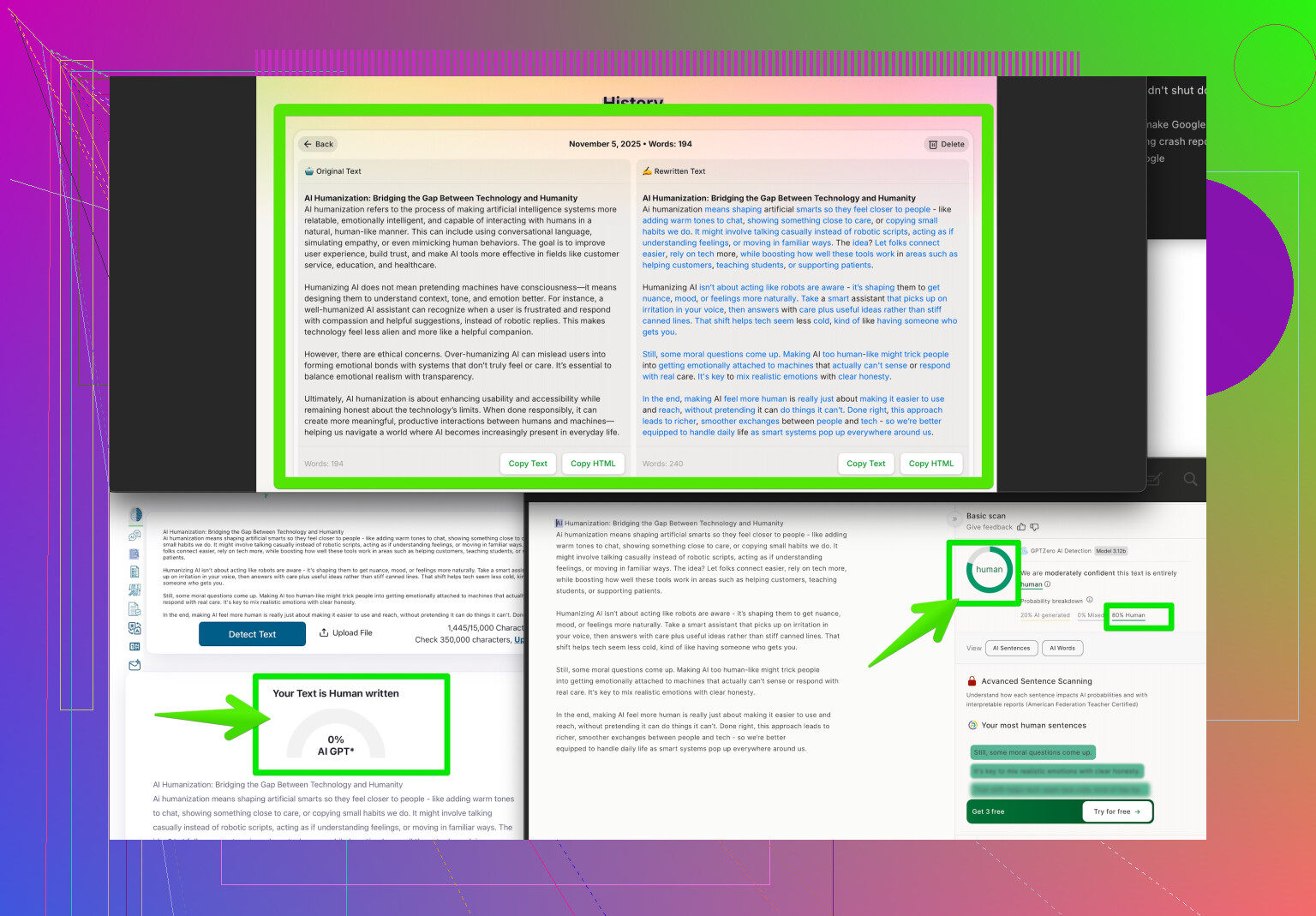
If you want to really fool AI detectors, check out tools that rewrite AI-generated content to seem more human, like the Clever AI Humanizer. Sites like make your AI text sound just like a real person wrote it and can help you dodge the classic AI fingerprints that detectors look for.
Bottom line: GPTZero’s decent, but don’t bet your grade (or job) on it being 100% right either way. Always double-check and use a few different detectors if it’s really important.
6 Likes
Honestly, using GPTZero is kinda like using a mood ring for essays—it tells you something, but don’t put your life savings on it. I get where @kakeru is coming from about the “perplexity” and “burstiness” jazz (fancy words for “does this writing feel like it was churned out by ChatGPT on a caffeine binge or nah?”), but in truth, these detectors get tripped up more than a dad at a skatepark.
Key features:
- Slap your suspicious essay into the box; the longer, the juicier the verdict.
- Get that quick “AI probability” score (spoiler: sometimes hilarious, sometimes terrifying).
- Drill down to see sentence-by-sentence analysis—if you’re into that kind of thing.
Effectiveness? Meh. Sometimes it nails it, sometimes it’s like calling your grandma a robot because she uses proper punctuation. Tons of false positives with really formal or Wikipedia-ish stuff, and it’s not rare for actual AI-generated fluff to slip through if it’s been slightly tweaked. So… it’s ok for a vibe check, not an arrest warrant.
Couple extra tips:
- Pair with at least one other detector if you’re making important calls. All of them have their own brand of nonsense.
- If you just need something foolproof, I’d try something like the Clever AI Humanizer. It reworks AI content so it won’t trip the usual “this looks botty” alarms.
- Not all rewriting tools are equal—some spit out garbled nonsense. Clever AI Humanizer is pretty dang good at making AI stuff sound less… stiff.
And for deep dives into minimizing AI footprints and practical tips, catch what Redditors are saying about making AI writing sound more natural. The hive mind there is weirdly obsessed and weirdly helpful.
Bottom line: GPTZero’s fun for playing detective but not exactly evidence for a trial. Don’t get burned thinking it’s magic, but useful if you need a quick sniff test.
Here’s the real take: GPTZero is more of a novelty right now than a true gatekeeper. Don’t get me wrong, it’s fun to run suspicious essays through because it serves up some slick graphs and the “sentence-by-sentence” anxiety breakdown is amusing. Gets you in the detective mood, but honestly? It’s got as much precision as a dart game after three Red Bulls. Both previous posts hit the high points—perplexity, burstiness, blah blah—but no AI detector is the oracle people wish for, and that definitely includes GPTZero.
Now, to spice up the options: if you want your AI-generated content to pass as grandma-wrote-it natural, Clever AI Humanizer is worth a swing. Pros: it’s super user-friendly, pumps out text with enough quirks to bypass a lot of detectors, and doesn’t reduce readability to gibberish (hey, that’s more than can be said for some of the other quick-fix spinners out there). On the con side, a dedicated examiner might still sniff out a few off beats—no tool makes AI writing 100% undetectable—and sometimes it throws in odd turns of phrase if you crank it up too high.
Competitors (think like those other folks chimed in about): there are plenty of rewriting bots and paraphrasers, but most struggle to keep the text clean while “humanizing.” Plenty will butcher your meaning or make it too obvious it was reworked. Clever AI Humanizer stands out by actually keeping things sensible.
Bottom line: if you’re after receipts (not guesses) about whether something is AI, GPTZero isn’t a final judge. But for quickly freshening up AI text or just getting it past the lowest bar? Clever AI Humanizer gives you a solid shot while keeping your writing readable. Just don’t forget: neither tool is a get-out-of-jail-free card. Add your own flair and always give that last proofread.