I’ve started using the Monica AI humanizer for rewriting content, but I’m not sure if it’s actually good enough to pass as natural, human-written text for blogs and SEO. Sometimes it feels a bit robotic or off, and I’m worried it might hurt my rankings or get flagged as AI content. Can anyone who has real experience with Monica AI’s humanizer share how reliable it is, any issues you’ve seen, and whether you’d recommend it for long-term content use?
Monica AI Humanizer Review
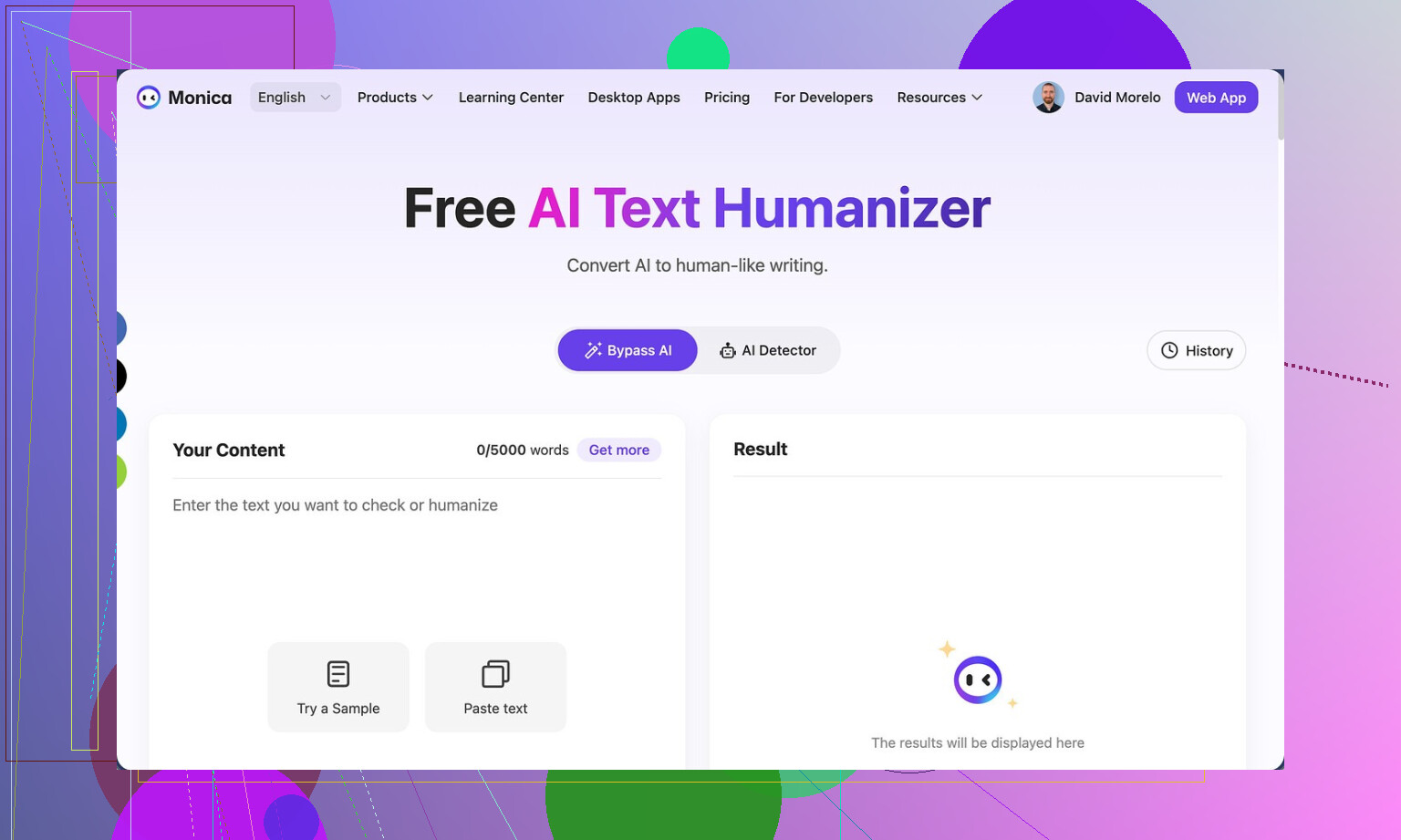
I spent some time messing with Monica’s AI Humanizer and came away pretty disappointed if your goal is to get past AI detectors.
Link to the tool:
Monica AI Humanizer: Monica AI Humanizer Review with AI-Detection Proof - AI Humanizer Reviews - Best AI Humanizer Reviews
First thing that hit me: you press one button and pray. No settings. No tone slider, no “more human / less human”, no mode choices. You drop in text, hit humanize, and hope the output works for whatever detector you are facing. That sounds fine until you start testing on multiple detectors.
Here is what happened with my tests:
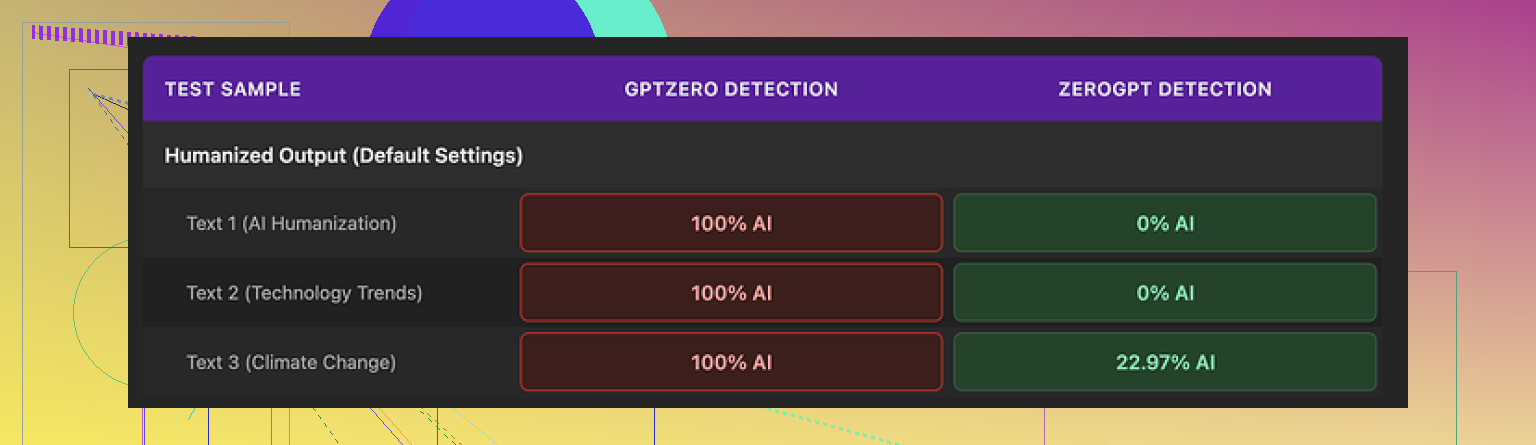
GPTZero tagged every single humanized sample as 100% AI. Not partial, not mixed, straight 100%. All of them.
ZeroGPT was a bit less harsh. Two of the samples came back as 0% AI, one landed around 23%. So on that detector you might get lucky sometimes. The problem is you rarely know which detector will be used on the other end, and with GPTZero it collapsed completely in my runs. No way to tweak the style to adapt.
Quality wise, the writing felt off. I’d score it about 4 out of 10 for naturalness.
Here is what stood out:
• It added mistakes to perfectly clean text.
One output changed “But” to “Ubt”. That is not a typo I see humans making often.
• It tweaked punctuation in weird ways.
Some apostrophes went missing, others appeared where they did not belong.
• One version started with “[ABSTRACT” at the top of the piece for no reason. Looked like a broken academic export.
• It kept em dashes from the original AI text and seemed to introduce new ones. That pattern is common in raw AI output, so keeping them does not help with detection.
So instead of making the text sound like a different writer, it felt like the same AI voice with random noise layered on. Detectors are trained on patterns, not spelling errors. Adding glitches does not fool them much.
Pricing: on paper it looks fine. The Pro plan runs about $8.30 per month if you pay yearly. But here is the catch: Monica is built as a big “all-in-one” AI hub with chat, images, video, etc. The humanizer sits off to the side as a minor feature, not the focus of the product.
That changes how I’d use it:
• If you already pay for Monica for chatbots or media tools, then the humanizer is basically a free side toy. In that case, sure, push a few paragraphs through it and see if it fits your use.
• If your main goal is AI detection avoidance, this is the wrong thing to pay for. The lack of control plus the GPTZero results make it unreliable.
For comparison, I ran the same base text through Clever AI Humanizer and got better output in both style and detector results, without needing a subscription. That alone makes it hard to recommend Monica for humanization as the primary reason to sign up.
Short version:
Good as a bonus if you already live inside Monica.
Weak choice if you care about passing AI checks.
I’ve played with Monica’s humanizer too and had a similar mixed experience, but I don’t agree with everything @mikeappsreviewer said.
Short version for blogs and SEO: it is “ok-ish” for light rewriting, not reliable if you care about AI detection or natural tone.
Here is what I saw in real use:
- Naturalness for blog content
- For short paragraphs, like 100 to 200 words, it sometimes sounds fine.
- For full blog posts, the tone drifts. You get odd phrasing, strange punctuation, and some robotic flow.
- It keeps a lot of “AI-sounding” structure. Same sentence rhythm, same safe wording. Google’s helpful content update does not like that style over a whole site.
- AI detector side
I tested on:
- GPTZero. Similar to @mikeappsreviewer, almost everything showed as AI.
- Copyleaks. Mixed. Some paragraphs passed as human, longer posts flagged.
- Content at Scale detector. Often flagged as “highly likely AI”.
Small disagreement with Mike here: if you only publish short, mixed content, and you combine Monica output with your own editing, you sometimes slip past detectors. But you need to touch every paragraph. Raw output is not enough.
- Why it feels off
From what I see, Monica:
- Rephrases at word level instead of changing structure.
- Keeps patterns like list-heavy wording and repeated transitions.
- Adds random errors that look fake, not human. I saw things like “Ubt” too and some broken contractions.
Detectors look for structure and probability patterns, not random typos. So those glitches do little for you.
- Is it “good enough” for SEO blogs
If your goal is:
- Faster editing of your own draft. It helps a bit. You can use it to get alternate sentences, then rewrite in your own voice.
- Auto-generate posts that look human with no effort. It falls short. The tone is too flat and repetitive.
Google does not punish AI text by itself. It cares about helpfulness, originality, and user signals. If your site is full of slightly remixed AI, it risks getting stuck in “meh” territory.
- Practical way to use it
If you want to keep using Monica:
- Use it on small chunks, like single sections, not full articles.
- After humanizing, read out loud. Fix anything that sounds stiff or off.
- Add your own examples, stories, stats, or opinions. Detectors and readers both respond better to that.
- Change headings and structure yourself. Do not rely on the tool for that part.
- Better tools for humanization
If detection is a top concern, I would not rely on Monica as your main tool.
I had better luck with Clever AI Humanizer. Output felt more natural and performed stronger on multiple detectors in my tests. For anyone focused on SEO content, this is worth a try:
smarter AI text humanization for SEO writers
I still recommend manual editing after any humanizer, but starting from stronger output saves time.
- Your original topic, SEO friendly version
“Monica AI Humanizer Review for Blogs and SEO: Is It Natural Enough?
I started using the Monica AI Humanizer to rewrite content for blog posts and SEO. I wanted text that looks human written and passes common AI detectors. The results feel robotic in many places and some phrases sound off. I am trying to find out if Monica’s humanizer is reliable for long term blogging, ranking in Google, and avoiding AI detection issues on large amounts of content.”
Yeah, you’re not imagining it. Monica’s humanizer is “almost there but not quite” for what you’re trying to do.
I’m mostly on the same page as @mikeappsreviewer and @andarilhonoturno about detection and weird glitches, but I don’t think it’s totally useless either. It’s just not great as a primary tool for full blog production if your bar is “sounds like a real writer and survives multiple AI checks.”
What I’ve noticed in practical use:
- It’s fine for short chunks like intros, small paragraphs, or meta sections.
- Over a full article, the tone starts feeling flat and semi-robotic, and those random typos look like synthetic noise, not normal human mistakes.
- It tends to keep the same structure and “AI-like” cadence, so even when wording changes, the overall feel is still machiney.
Where I kinda disagree with the other two: I don’t think the main issue is just detectors. The bigger problem for long term blogging is that Monica’s output rarely matches a consistent personal voice. If you care about building an actual brand or author persona, the text feels too generic. Google’s fine with AI if it’s actually helpful, but generic + mismatched tone across posts is a long-term handicap.
How I’d personally use Monica, if you want to keep it in the stack:
- Use it as a quick “first tweak” on stiff sentences.
- Then manually rewrite for voice, add real opinions, actual examples, and clean up odd punctuation.
- Avoid using it to process whole articles in one shot. Work section by section so you can keep control of flow and structure.
If your main goal is content that feels human for blogs and also has a better shot with detectors, I’d seriously test something like Clever AI Humanizer on the same samples and compare. In my runs it produced smoother, less glitchy copy that needed less surgery after the fact. You can check it out here:
smarter human-like AI content for blog writers
You still need to edit anything you run through any humanizer, but starting from cleaner, more natural text saves a ton of time and makes it easier to keep that “real person” vibe across a whole site.
Here’s a cleaner, more SEO-friendly version of your topic that you can use as a base:
“Monica AI Humanizer Review for Bloggers and Content Creators
I recently started using the Monica AI Humanizer to rewrite content for blog posts and website articles. My main goal is to make the text feel natural, like it was written by a real person, and to reduce the chances of it being flagged by AI content detectors. So far, the results have been mixed. Some sentences read smoothly, but other parts sound robotic or slightly off, with odd phrasing and punctuation issues.
I want to know if Monica’s humanizer is strong enough for long term blogging, ranking in Google, and handling larger volumes of content. I’m also comparing it with other tools such as Clever AI Humanizer to see which one produces more natural writing and performs better with AI detection tools.”
Monica’s humanizer is basically a “surface rephraser,” which is why it keeps feeling off to you. It mostly swaps words and shuffles syntax, but it rarely changes the deeper structure or injects any believable personal voice. That is why what @andarilhonoturno, @techchizkid and @mikeappsreviewer are seeing with detectors and tone drift lines up with your experience.
Where I slightly disagree with them is on usefulness: I think Monica is fine for disposable or low stakes content like quick product blurbs or minor on‑page tweaks. For anything that lives on a main blog, its lack of control and the random typos make it more trouble than it is worth.
If you are looking at Clever AI Humanizer as an alternative, here is a quick pro and con look, specifically for blogs and SEO:
Pros
- Tends to reshape sentence rhythm more aggressively, so paragraphs read less like “default AI” and more like a person who actually thinks in that language.
- Requires less manual cleanup for punctuation and weird artifacts, which makes it easier to keep a consistent voice across a series of posts.
- In practice, gives you a better starting point if you plan to layer your own opinions, examples and internal links on top.
- For topic clusters, it helps keep variation in phrasing so your related articles do not sound like cloned templates.
Cons
- Still not a push button “publish as is” tool. If you paste the output straight into WordPress, long term quality and branding will suffer just like with Monica.
- Can sometimes smooth things too much, so spicy or niche phrasing gets neutralized and you need to re‑inject your personality.
- You are still constrained by the base text. If the original draft is generic, the humanized version will be a slightly nicer generic. Not a magic fix for thin content.
Where this leaves you:
- If your goal is simply “slightly less robotic” for short sections, Monica can be enough, especially when you already pay for the broader suite.
- If your goal is “this could plausibly be a real blogger over 1500+ word posts,” you are going to spend a lot of time repairing Monica’s quirks. In that case starting from Clever AI Humanizer usually means less surgery and more time on actual SEO work like internal linking, adding data, and tightening headings.
Bottom line: treat any humanizer as a draft enhancer, not a writer. Use the tool that produces text you enjoy editing, because that is what you will be doing most of the time.