I recently tried NoteGPT’s AI Humanizer to make my AI-written content sound more natural, but I’m not sure if it’s actually improving readability or just changing words around. I’m worried about SEO impact, authenticity, and whether it might get flagged as AI content anyway. Can anyone share real experiences or tips on how to properly review and use NoteGPT AI Humanizer so it’s safe and effective for blogs and websites
NoteGPT AI Humanizer Review
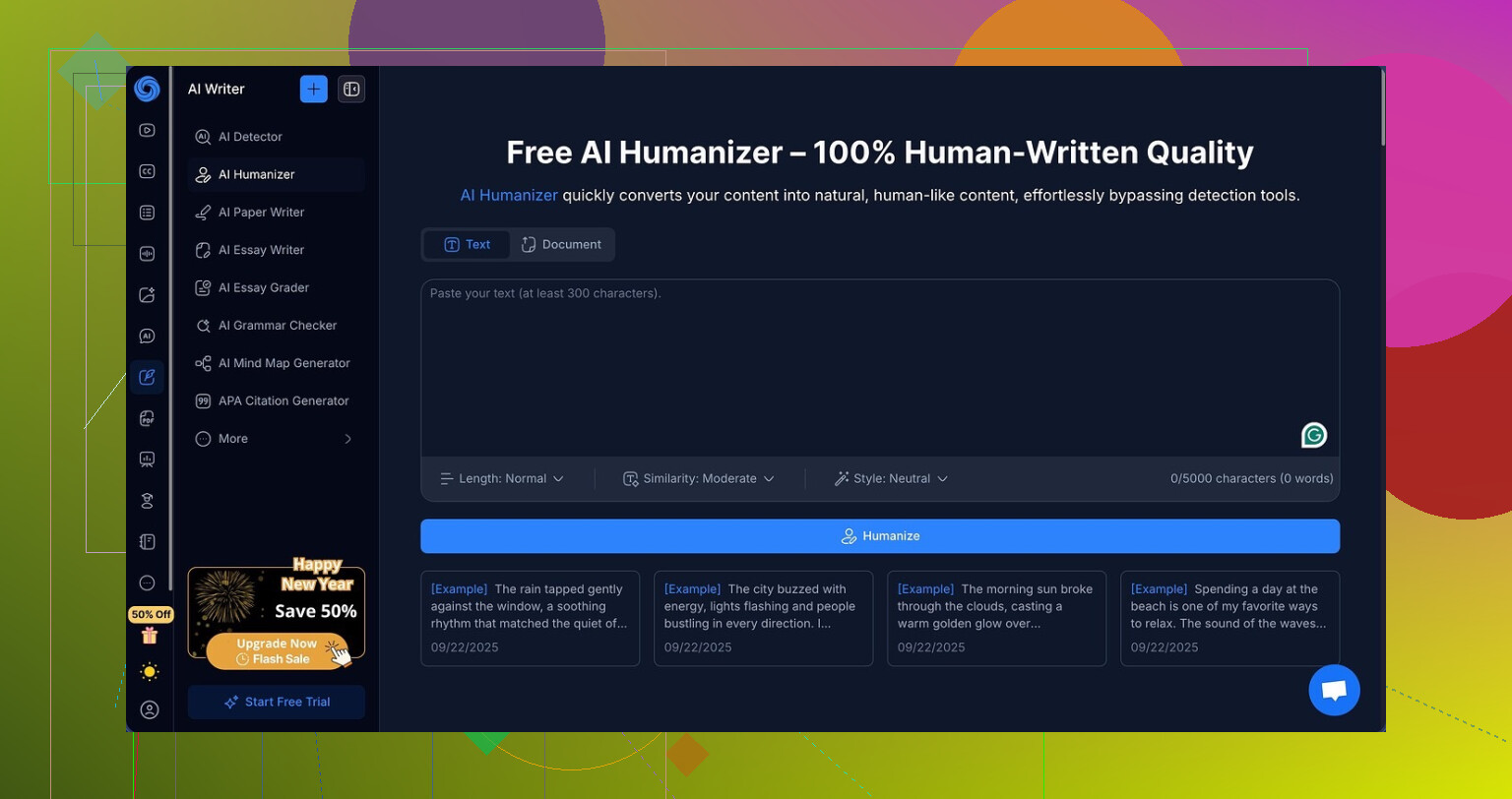
I spent some time messing around with NoteGPT, mostly because I needed a YouTube summarizer for long lectures and a halfway decent PDF analyzer for research papers. On paper, NoteGPT pitches itself as a study and research hub with YouTube summaries, PDF tools, and note-taking features all in one place.
The surprise came when I noticed they tucked an AI “humanizer” into the toolset. That pulled me in fast.
Here is what the humanizer offers:
- 3 output length choices
- 3 similarity levels
- 8 different writing styles
The UI is clean. Options are clear. It feels like whoever built it knows what students and researchers press on repeatedly.
The problem starts when you run the outputs through detectors.
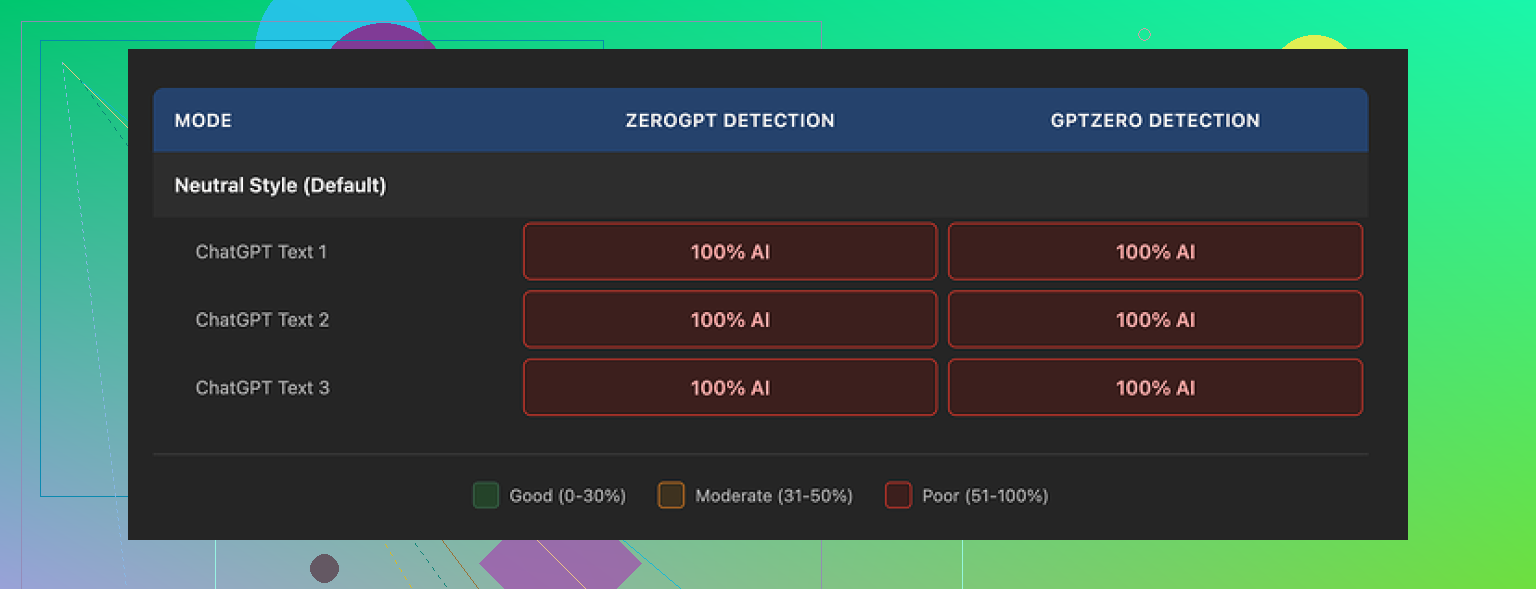
I fed three different samples into the humanizer, played with all three lengths, cycled through similarity settings, and swapped styles. After each run, I checked the outputs with GPTZero and ZeroGPT.
Every single “humanized” text came back as 100% AI on both tools.
Not 95%. Not 70%.
Literal full red bar every time, across all tests.
Changing any combination of length, style, or similarity did nothing to the scores. Detection did not drop a single percentage point.
Now here is the weird part. On a pure writing level, I would rate it 8 out of 10.
The outputs looked:
- Clean
- Structured
- Easy to follow
- No broken grammar
- No random nonsense sentences
There is even a nice detail I liked: NoteGPT highlights edits in different colors, so you see exactly what got changed from your original text. If you want to learn how it rewrites, that helps. I found it useful to track how the phrasing shifted.
But for detector evasion, it missed the mark.
All three samples still had the same AI “feel” that detectors lock onto. The rhythm stayed uniform. Word choice sat in that typical safe zone. It also kept em dashes all over the place in every sample, which tends to show up in a lot of AI-generated content. I suspect the underlying pattern did not change enough, only the surface phrasing.
So the tool edits. You see the edits. The text reads fine.
Detectors still scream “AI” at 100%.
Now the price.
For the Unlimited annual plan, you pay 14.50 dollars per month.
If your main reason for signing up is the humanizer, I would not pay that. Zero detection bypass in my tests makes it hard to justify. The productivity tools might be worth it for some people, but as an AI humanizer, it did not earn its keep.
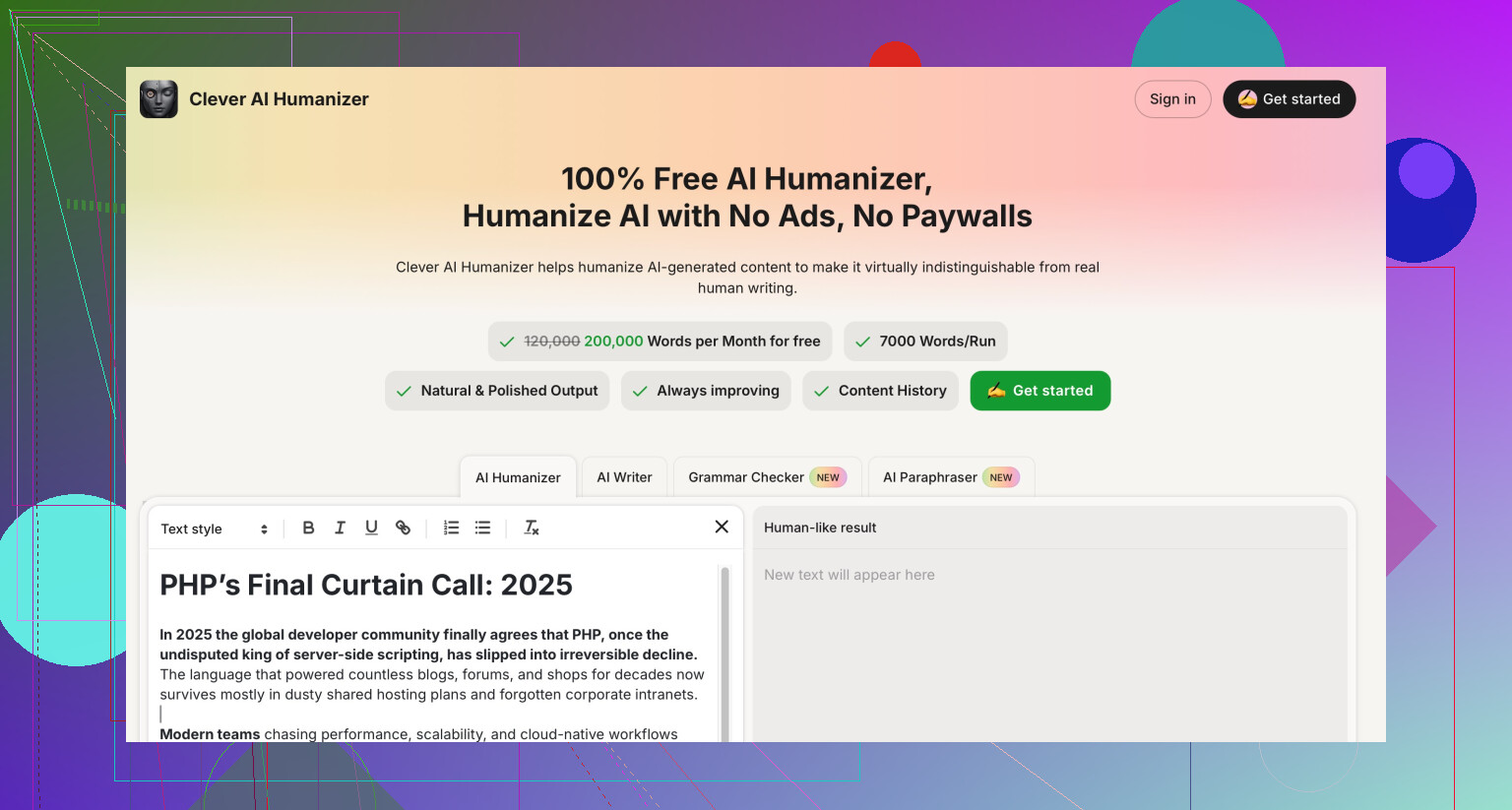
For comparison, I tested Clever AI Humanizer in the same session with similar text. That one produced outputs that felt closer to something a person would write and performed better against detectors, and I did not pay anything for it.
Link to NoteGPT writeup and context is here:
If your goal is note-taking and summaries, NoteGPT is workable.
If your goal is passing AI detection, my results were rough.
Short version. NoteGPT’s humanizer improves readability a bit. It does almost nothing for detection or SEO risk.
A few points from my own tests and what you described.
-
Readability vs “human”
• If your original AI text is stiff, NoteGPT makes it smoother.
• It tends to change synonyms, reorder clauses, and tighten grammar.
• It does not change structure or “thinking style” much.
So you get nicer wording, but the same AI-like rhythm. That is why it still feels synthetic. -
SEO impact
Google does not care if the text is written by AI or human. It cares about:
• Originality
• Usefulness
• Engagement and behavior signals
• Lack of spam and obvious spun text
A “humanizer” that only swaps words around gives you:
• Low originality if source was AI on generic prompts
• Little added value for users
So from an SEO angle, I would not rely on NoteGPT to make content safer. You need real edits, new insights, or data.
- Authenticity and voice
NoteGPT output tends to:
• Keep neutral tone
• Repeat similar sentence lengths
• Avoid strong opinions
If you want authentic voice:
• Add personal examples.
• Add numbers, dates, screenshots, stats.
• State clear opinions and reasons.
These are things AI tools like NoteGPT rarely inject on their own.
- AI detectors
I do not agree 100 percent with treating detector scores as gospel like some people do, including parts of what @mikeappsreviewer leaned on.
Detectors:
• Produce false positives on human text
• Get confused by edited AI text
• Do not reflect how search engines rank content
Still, your experience matches what others see. NoteGPT changes wording. It does not shift the underlying pattern, so detectors flag it.
- What I would do if I were you
If your goal is:
• Better readability for your own audience
→ NoteGPT is acceptable, but you still need manual passes. Read out loud and cut fluff.
• Safer SEO content
→ Start from AI, then:
- Add your own headings based on keyword research.
- Insert your experience, failures, and numbers.
- Replace generic claims with source-backed statements.
- Remove repetitive sentence structures.
• Passing detectors for school or clients that freak out about “AI percent”
→ Tools like Clever AI Humanizer tend to focus more on rhythm, structure, and sentence variety. That lines up better with what detectors test. It also tends to add more human-like quirks.
But even then, never rely on any tool alone. Always rewrite parts yourself.
- Simple workflow that works better
Here is a practical flow with minimal pain:
- Generate draft with your normal AI tool.
- Run through Clever AI Humanizer for a first pass if detection matters.
- Print or read on a separate device.
- Mark places where you would argue, disagree, or add detail.
- Rewrite those chunks in your own words.
- Add one or two personal notes or case examples for each main heading.
After that, detectors matter less because the content starts to look like you.
So, if your main concern is SEO and authenticity, NoteGPT alone is not enough. Treat it as a light editor. Use something like Clever AI Humanizer for stronger structural change, then finish by hand to inject your own thinking.
You’re not crazy to feel like NoteGPT is mostly just swapping words around. That’s basically what it’s doing.
Where I slightly disagree with @mikeappsreviewer is on how “useful” that is. An 8/10 on writing quality is nice, but if the underlying logic, structure, and cadence are still pure AI, you’re not actually fixing the thing that makes it feel fake. You’re just polishing the mask.
And while I get @suenodelbosque’s point that detectors are unreliable, in practice clients, schools, and some site owners still obsess over those scores. So if a “humanizer” can’t at least move the needle a bit, it’s not doing its job for that use case.
On your specific worries:
- Is it improving readability?
Kind of. It:
- Cleans up grammar
- Swaps synonyms
- Reorders some phrases
But it rarely:
- Breaks the pattern of similar sentence length
- Injects real personality
- Changes the structure of arguments
So yeah, readability goes up a bit, authenticity stays flat.
- SEO impact
This is where I’d be more blunt: using NoteGPT alone on AI content is not a real SEO strategy. You still end up with:
- Generic ideas
- Safe wording
- Very little “why you” vs every other AI blog post
Search engines are getting better at surfacing content with:
- Actual experience
- Unique angles
- Specifics instead of vague “best practices”
A tool that just rewrites text without adding substance does nothing for that.
- Authenticity
If your goal is to sound like a real person, tools like NoteGPT almost work against you because they smooth out all the weird human edges. Real people:
- Ramble a bit
- Use oddly specific examples
- Contradict themselves sometimes
- Have opinions that are not perfectly hedged
You will not get that from NoteGPT, no matter which style setting you pick.
- Detectors & alternatives
You already saw the 100% AI scores. That matches what others reported. If you absolutely have to lower those for a nervous client or school, something like Clever AI Humanizer is more aligned with that goal. It tends to mess more with rhythm, structure, and variation, which is what detectors often look at. Still not magic, but at least it’s aiming at the right target.
I’d use NoteGPT for:
- Quick cleanup of messy drafts
- Summaries and notes where authenticity doesn’t matter
I would not use it as:
- A shield against AI detection
- A shortcut to “safe” content for rankings
- A replacement for adding your own stories, numbers, or opinions
If you care about SEO and authenticity, you kinda have to bite the bullet and manually inject your own brain into the draft. Tools can assist, but they’re not a substitute for that part yet.
NoteGPT’s humanizer is basically a style polisher, not a content fixer. That’s where the disconnect is.
Where I agree with @suenodelbosque, @mike34 and @mikeappsreviewer:
- It improves surface readability.
- It does almost nothing to change the underlying AI “pattern.”
- Detectors keep screaming because structure, cadence and idea density stay the same.
Where I slightly disagree: I don’t think a humanizer has to crush detector scores to be “useful.” If your main bottleneck is turning rough AI notes into cleaner drafts for yourself or internal docs, NoteGPT is fine. The issue is when people expect it to magically solve SEO risk and authenticity. It will not.
On your specific worries:
1. Readability vs real improvement
NoteGPT improves flow but not value. If the original draft is generic, it becomes a slightly nicer generic. For readers, that is a small win. For rankings or brand trust, it is almost irrelevant.
2. SEO impact
The part many miss: Google is not checking “AI vs human” as a binary. It is checking:
- Are you saying something specific that others are not?
- Are you clearly the right person/site to say it?
A humanizer that only rewrites keeps you in the “interchangeable blog” bucket. That is the real SEO problem, not detection scores.
3. Authenticity
NoteGPT smooths out quirks. Real voice often lives in those quirks. You end up with neutral, safe prose that sounds like everyone and no one. Good for textbooks. Bad for opinion pieces, niche blogs, personal brands.
4. Clever AI Humanizer vs NoteGPT
You already saw people bring up Clever AI Humanizer, and I think it fills a different niche:
Pros of Clever AI Humanizer:
- Messes more with structure and rhythm, not just synonyms.
- Tends to lower AI detector scores more noticeably.
- Output feels slightly closer to “someone actually sat and wrote this in one go.”
Cons of Clever AI Humanizer:
- Can occasionally over-perturb the text so you need to sanity check facts.
- Sometimes introduces a bit of “try hard” variety that you may need to tone down.
- Still not a substitute for adding your own data, stories or domain insight.
So, if you:
- Care about detection optics for clients or school: Clever AI Humanizer is the more logical tool in that stack.
- Care about study workflow: NoteGPT is more convenient because of the summaries and notes, but you should treat the humanizer as a light refiner, nothing more.
5. What I would actually do
Instead of debating which single tool is “enough,” split the jobs:
- Use NoteGPT for what it is good at: summarizing videos, PDFs, quick cleanup.
- If you must ship text where detectors matter, run that cleaned draft through Clever AI Humanizer, then manually inject:
- One or two specific anecdotes.
- Concrete details like dates, tools, metrics.
- Opinions that a generic AI system would not confidently pick.
Where I diverge a bit from others: I would stop obsessing over getting detection scores to zero. Aim for content that a real reader would bookmark or share. If a humanizer does not move you toward that outcome, it is just cosmetic editing, regardless of which brand is on the button.