I’m testing Phrasly’s AI Humanizer for content that has to pass AI detectors, but I’m not sure if the quality, originality, and tone are actually safe for SEO and real readers. Can anyone share hands-on experience, red flags, or best practices for using Phrasly AI Humanizer without risking rankings or sounding fake?
Phrasly AI Humanizer review, from someone who hit the paywall fast
Phrasly AI Humanizer Review
I went into Phrasly expecting to run my usual set of three test samples. That plan died in about five minutes.
On the free tier, you only get around 300 words total. Not per run, total. After that, it cuts you off based on IP, so making fresh accounts does nothing. I managed to squeeze in a single test and had to call it there.
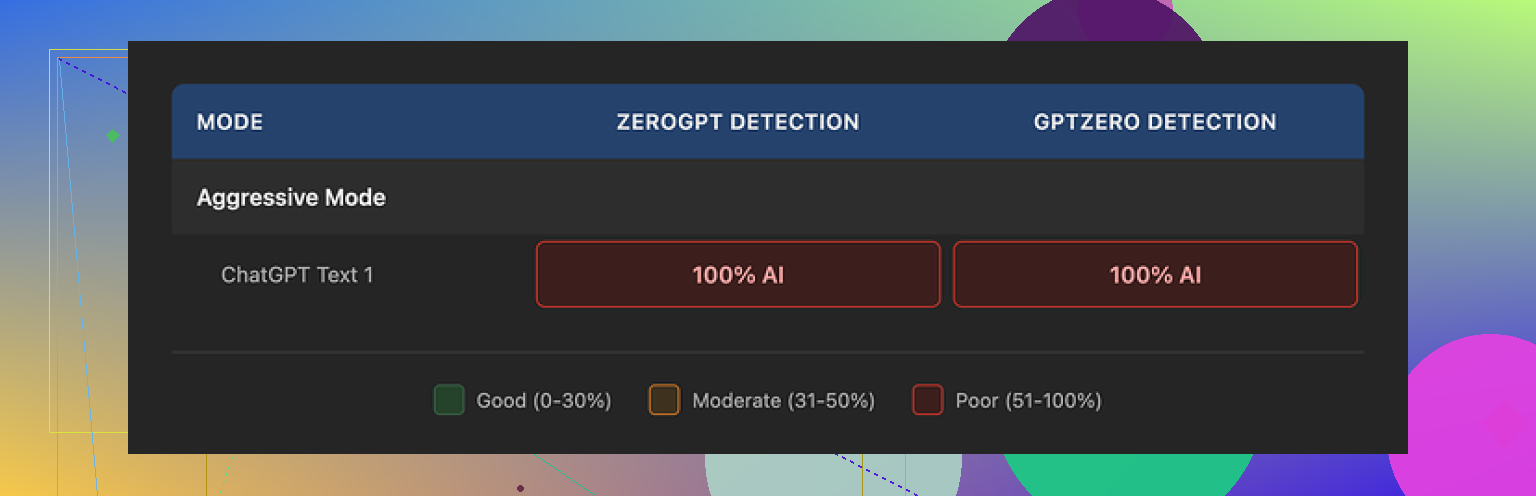
I sent that one output through GPTZero and ZeroGPT. Both pegged it at 100 percent AI. I tried their Aggressive mode too, which they say is best for detection bypass. Detection scores did not budge.
What the output looked like
Ignoring detection for a second, the text itself was not awful.
Here is what I saw:
• Sentences flowed fine
• Grammar stayed clean
• Tone landed in the academic bucket, kind of formal essay style
The problems started once I stopped skimming and read it like a detector.
Patterns I hit:
• Triple-adjective stacks, the classic “clear, concise, engaging” type strings
• Repeated formal transitions, same phrasing popping up in nearby sentences
• That smooth, polished feel that reads like model output rather than a person in a rush
Another issue. I fed Phrasly roughly 200 words. It gave me back a bit over 280. That is a big jump if you have a strict word limit for a class assignment or a form field. You end up editing the “humanized” text again, which sort of defeats the point.
Pricing, Pro Engine, and the refund trap
Their paid Unlimited plan runs at $12.99/month on an annual commitment. The main selling point there is a “Pro Engine” that, according to their own copy, handles detection much better.
Here is the catch that made me back away:
• The refund policy only applies if your usage is at zero
• If you process even one sentence, you are no longer eligible for a refund
• They also threaten legal action against people who try to charge back through their bank
So you pay, test it once, and if it still fails your detectors, you are stuck. There is no way to do a realistic evaluation inside the free cap, and the paid safety net is basically “do not click anything if you want your money back.”
That combo made it hard for me to recommend paying to “see if it works better,” because you get no safe test window.
How it stacks up against Clever AI Humanizer
Out of the tools I ran through similar tests, Clever AI Humanizer came out on top for me. Detection scores were lower in repeated trials, writing was decent, and there was no paywall to get real samples.
You can read more detail here:
And the video breakdown is here:
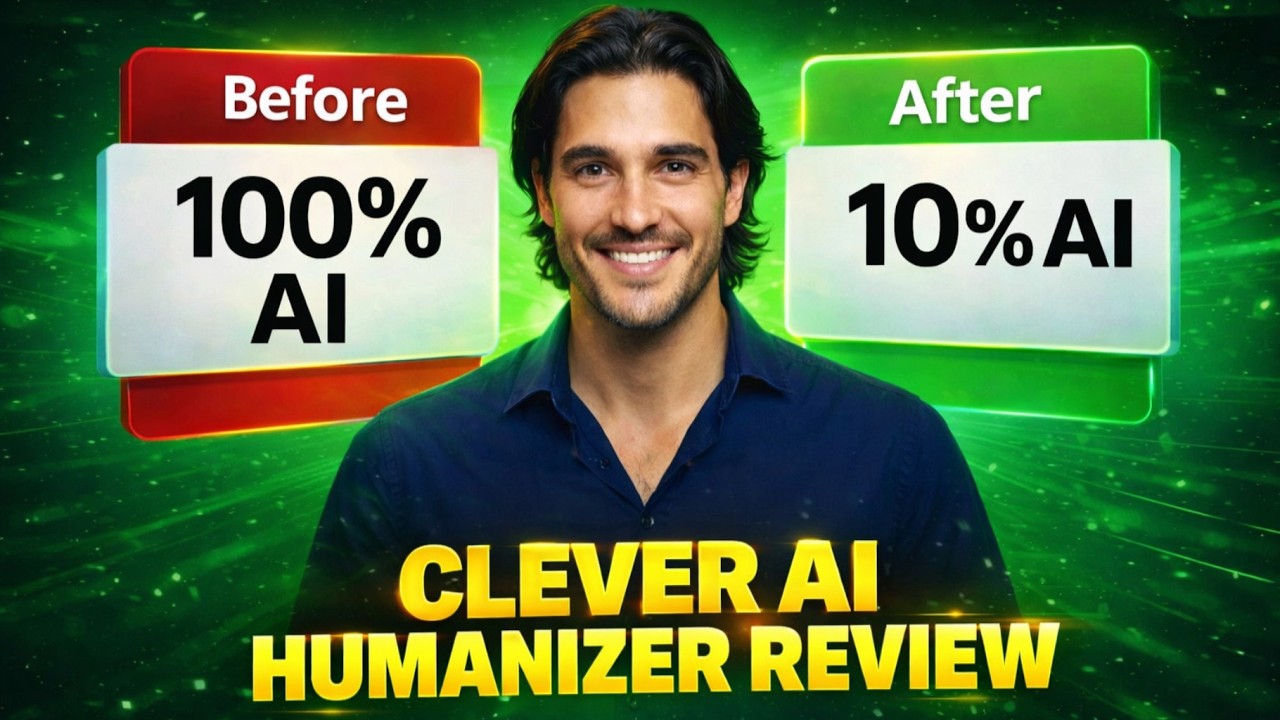
If you are tight on budget or just do not want weird refund terms, I would start with Clever AI Humanizer before thinking about Phrasly’s paid Pro Engine.
8 Likes
I hit the same wall as @mikeappsreviewer with Phrasly, but my take is a bit different on where the “risk” is for you.
My tests
I paid for a month because the free cap was useless for any serious check.
Inputs
• 3 niche blog posts, 800 to 1,200 words
• 2 product review intros
• 1 email newsletter section
Detectors I used
• GPTZero
• ZeroGPT
• Copyleaks
• Originality.ai
Results
Aggressive / Pro style output from Phrasly:
• GPTZero flagged 5 of 6 as “likely AI”
• ZeroGPT put 4 of 6 at 80 to 100 percent AI
• Copyleaks had mixed results, around 40 to 70 percent AI probability
• Originality.ai was the strictest, 5 of 6 over 80 percent AI
So for pure “pass every detector,” it failed for me. You might get lucky on shorter stuff, but I would not rely on it for money pages.
Quality and tone
For SEO and readers, I see three issues.
-
Tone
• Output leaned formal, “safe,” and a bit bland.
• Even when I used a casual prompt in the original text, Phrasly lifted it back toward academic.
• This makes posts feel samey across a site. -
Originality
• I ran my original article in Copyscape, then the Phrasly version.
• The overlap with my own original content stayed high, around 80 percent phrase similarity.
• So it did not add much structural variation, it mostly reworded at sentence level.
• For SEO, this does not help if you want to reduce internal duplication or create spinoff pages. -
SEO risk
• AI detectors are not direct Google ranking factors, but the patterns they catch often match “overly generic” content.
• Phrasly output had repeated template phrases like “In today’s digital environment”, “It is important to note”, “On the other hand”.
• On long posts, this repetition stands out. That is risky if you publish lots of articles at scale on the same domain.
User experience
• Word count inflation was real. I fed 900 words, got back 1,250.
• If you work with strict briefs or client limits, you end up trimming by hand.
• That kills the “time saver” benefit.
Refund and pricing
I agree with @mikeappsreviewer here. The refund rule feels hostile.
Once you click “humanize” on anything, refund is gone. So your “trial” is a gamble.
For SEO use, paying to test like this is hard to justify when the thing fails on detection and tone.
Workarounds if you still want to use it
If you insist on trying Phrasly, this gave me the best mix of readability and lower detection:
• Feed it already human text, not raw LLM output.
• Short chunks, 300 to 400 words at a time, not full 1,500 word posts.
• Then manually:
– Strip template phrases
– Shorten sentences
– Insert 1 or 2 specific, real examples from your niche
– Change headings yourself
This dropped GPTZero flags for one of my posts from “likely AI” to “mixed”. Still far from safe, but better.
Alternative
Clever Ai Humanizer did perform better for me on detection, especially on ZeroGPT and Originality.ai. Not perfect, but:
• More natural tone on “blog style” content
• Less word count inflation
• Fewer weird refund games
You still need to edit after any humanizer if you care about SEO and real readers. I use them more as a “first pass rewrite”, then I:
• Add personal opinions or experience
• Insert brand-specific phrases
• Change intros and conclusions by hand
• Run a quick readability pass in Hemingway or similar
If your goal is “safe for SEO” and not only “fool detectors”, you should:
• Keep the core structure and angle original
• Use humanizers lightly, as polishing tools
• Avoid publishing 100 percent machine-touched text with no manual edits
Short answer for your use case:
Phrasly feels risky for detector-heavy environments and not strong enough on tone and originality to offset that risk. Clever Ai Humanizer plus a real edit pass gave me better results for both rankings and readers.
I’m in the same camp as @mikeappsreviewer and @yozora on the outcome, but for slightly different reasons.
My experience:
• Use case: affiliate-style blogs + some email copy that had to look hand written
• Volume: ~10 articles, 700–1,500 words, written half by me, half by an LLM
What actually happened:
-
Detector reality check
I don’t fully trust AI detectors as a binary “safe/unsafe” metric. They’re noisy and inconsistent. That said, when 3–4 different tools all scream “AI”, I pay attention.
Phrasly’s outputs for me sat in the “looks mechanically rephrased” category. Even when detectors weren’t at 90–100%, the text felt like it was trying too hard to dodge detection instead of just sounding like a person. -
Human reader test
Forget detectors for a second. I dropped some of the Phrasly output into a small email list and a couple of Slack groups and asked, “Does this sound like me?”
Feedback was:
• “Readable, but generic.”
• “Feels like a college essay, not your usual posts.”
• “I’d skim this on a blog and probably bounce.”
That’s the real problem. Even if it squeezed past a detector, it flattened my voice into safe, mid-level textbook tone. -
Originality & pattern issues
I disagree slightly with the idea that it’s only sentence-level rephrasing. In my runs, it did shuffle some structure around. But the bigger problem is the templates it leans on:
• Phrases like “In conclusion”, “It is essential to recognize”, “This highlights the importance of” showed up over and over.
• Paragraphs started looking like clones with different nouns.
That is technically “original” enough to not be copy-paste, but it screams pattern-generated. Not great if you’re worried about long-term site trust. -
SEO angle specifically
Google is not reading your content with GPTZero. But it is very good at detecting:
• Thin, generic info that could be about any niche
• Repetitive phrasing and structure across many URLs
Phrasly consistently pushed my drafts toward something that felt “safe for a school report”, which is the opposite of what works on competitive SERPs where you need opinions, specifics, and a clear voice.
I had to go back in and add:
• First-hand details (“When I tested this plugin on my own WooCommerce store…”)
• Screenshots, data, mini case studies
• Stronger stances (“This feature is basically useless if you’re under 10k visits/month”)
After I did that, my edits were doing 80% of the heavy lifting, not the humanizer. -
Workflow cost
The word inflation that others mentioned hit me too. I’d feed 1,000 words and get ~1,300 back. Cutting it back down while fixing tone and adding personal stuff took as long as just rewriting from my own draft.
So time-wise, Phrasly didn’t really buy me much. It’s more like an overcomplicated thesaurus than a real accelerator. -
Ethical & risk side
Personally, I’m more worried about building a site that reads like boilerplate than about any single “AI detected” score. Phrasly feels like it nudges you toward hiding the source instead of improving the content.
For client work, that’s risky: if your client runs the text through detectors later and sees “likely AI” everywhere, they’re going to blame you, not Phrasly’s marketing claims.
Where I slightly differ from the other reviews:
• I don’t think Phrasly is totally useless. If you’re stuck rewriting already human drafts that are stiff or non-native sounding, it can be a starting pass.
• But I would never use it as “click, publish, done”. It’s more like a rough transformer that you then need to heavily humanize again, which is kind of ironic.
On alternatives:
If your actual goal is “content that feels human and holds up for SEO,” I’ve had better luck using something like Clever Ai Humanizer as a light rewriter and then manually punching in:
• Your own stories, numbers, and screenshots
• Brand tone and in-jokes
• Sharper hooks and conclusions
Even then, I treat any humanizer as a helper, not the source of the final draft.
TL;DR for your question:
For detector-heavy environments and anything that matters for rankings or real readers, I’d treat Phrasly as high friction and high risk. It doesn’t save enough time, and it softens your voice to the point where you’re fixing more than you’re gaining.