I’ve been using StealthWriter AI to rewrite content and I’m not sure if it’s actually keeping things undetectable or just rephrasing in obvious ways. I need feedback from others who’ve tested it for AI detection, accuracy, and originality so I can decide whether to keep paying for it or switch tools. Any real-world experiences or tips would really help.
StealthWriter AI review, from someone who burned a month on it
StealthWriter AI:
I ran this thing for about a month on a paid plan. Here is what I saw, no fluff.
StealthWriter pricing and setup
I paid in the 20 to 50 bucks per month range, depending on the test account and plan. Not cheap for a “make this sound human” tool.
You get:
- Two engines: Ghost Mini and Ghost Pro
- An intensity slider from 1 to 10
- A few style presets
- Free tier: 10 humanizations per day, up to 1,000 words, account required
Ghost Pro is paywalled.
Interface is simple enough. Paste text, pick engine, pick level, hit go. Nothing fancy there.
AI detection tests
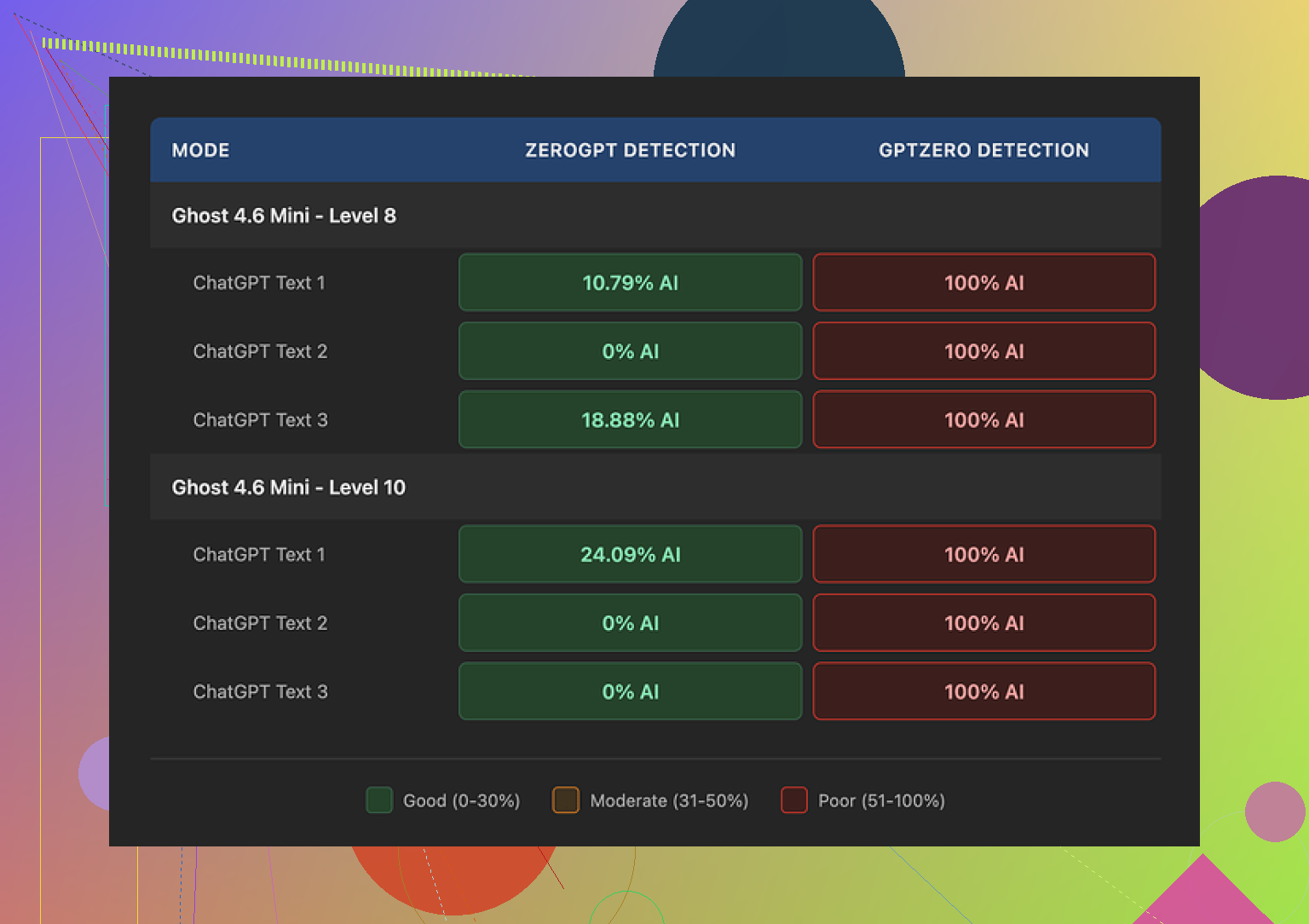
My whole point with this tool was AI detectors. I pushed everything through two detectors:
- ZeroGPT
- GPTZero
Results were mixed in a way that made me stop using it.
ZeroGPT:
- At intensity level 8, I sometimes got results like:
- 0 percent AI
- 10.79 percent AI
- Looked decent on multiple samples, not only one cherry picked result.
GPTZero:
- Every single StealthWriter output got tagged as:
- 100 percent AI
- This happened no matter:
- Ghost Mini vs Ghost Pro
- Intensity 3, 5, 8, 10
- I redid runs with different source texts, topics, lengths. Same outcome.
So for GPTZero, StealthWriter did nothing useful for me.
Writing quality at different intensity levels
I fed it mostly technical and academic style content. Climate science, policy, longform explanations. Here is where it went sideways.
At intensity 8:
- Quality felt around 7 out of 10
- Still readable
- Issues I kept seeing:
- Awkward phrasing that no careful human would write
- Occasional missing words in the middle of a sentence
- Slight tone mismatches from paragraph to paragraph
Example pattern:
- A clean sentence like:
- “Rising sea levels increase the risk of flooding in coastal regions.”
- Turned into something closer to:
- “Rising sea levels increase the risk of flooding around coastlines regions that are facing more impacts.”
Not broken, but off. Teachers and editors would notice.
At intensity 10:
- Quality dropped to maybe 6.5 out of 10
- The tool started injecting strange phrases and errors
Things I saw in actual outputs:
- A random “god knows” inside a serious climate science passage
For example:- “Global temperatures are rising and, god knows, the models keep warning about the trends.”
- Grammar mistakes like:
- “Coastlines areas”
- “feeling quite more frequent flooding”
Stuff like that jumps out to any native speaker. It reads like someone faked “casual” and missed.
So if you push it hard enough to try to trick detectors, the text starts looking worse to humans.
Length handling
One thing StealthWriter did well for me:
- It kept the text length close to the original
- No 40–50 percent inflation like some other humanizers I tried that turn a 1,000 word article into 1,600 words of rambling.
For people who need to stay near a word limit, that matters. On that part it behaved reasonably.
Ghost Mini vs Ghost Pro
Ghost Pro sits behind the paid plans. Since I paid, I compared the two.
My rough take:
- Ghost Mini
- Slight edits
- Safer for preserving structure
- Still failed GPTZero for me
- Ghost Pro
- Heavier rewrites
- More “personality” but more weird injections
- Also failed GPTZero across the board
Detection-wise, both felt equally pointless on GPTZero in my tests.
How it stacked up against Clever AI Humanizer
On the same kind of inputs, I tried Clever AI Humanizer too.
Quick points:
- Clever AI Humanizer outputs sounded more like stuff I would write on a tired day
- Fewer bizarre phrases
- Better grammar stability
- It did not blow up text length
- It is free
Side by side, if I pasted both outputs into a doc and walked away for 10 minutes, I could pick out which one came from StealthWriter most of the time. The StealthWriter text had that “someone forced casualness over a formal base” vibe.
Who this might still suit
If you:
- Only care about ZeroGPT results
- Want something that keeps your word count tight
- Do not mind paying monthly
then StealthWriter might still be worth a shot for you.
If you:
- Need to get past GPTZero
- Care about clean grammar at higher intensity levels
- Prefer not to pay for this type of tool
then my experience leans much more toward Clever AI Humanizer as the better option right now.
Screenshots from my original runs

I had a very similar experience to what @mikeappsreviewer described, but my take is a bit different on where StealthWriter makes sense.
Short version. It rewrites text. It does not reliably “hide” AI for all detectors.
Here is what I saw after a couple weeks:
- AI detection
I ran it against:
- GPTZero
- ZeroGPT
- Copyleaks AI
- Originality.ai
On medium technical content and some casual blog stuff.
Results:
- ZeroGPT often dropped to under 15 percent AI at higher intensity. Sometimes even under 5 percent.
- GPTZero almost always flagged it as AI generated, even at low intensity.
- Copyleaks AI stayed suspicious on long pieces, only small paragraphs slipped through as “mixed”.
- Originality.ai gave lower AI percentages than straight GPT output, but still looked flagged on long essays.
So if your goal is “safe across multiple detectors”, it falls short. If your goal is “better numbers on certain detectors like ZeroGPT”, it does something.
- Human quality
You mentioned it feels like it is only rephrasing in obvious ways. I saw three patterns:
-
Low intensity (3–4):
- Structure stays close to the original.
- Sentences look like a mild paraphrase.
- Most teachers or editors who know your style will still suspect AI if the base text was AI.
-
Mid intensity (5–7):
- Readable, but I spotted odd phrases, slight tone jumps, and the kind of wording I never use in my own writing.
- For graded work or important content, an attentive human will notice the quirks unless you manually edit after.
-
High intensity (8–10):
- Same as what @mikeappsreviewer said.
- I hit weird inserts like “honestly speaking” in serious reports and phrases like “flooding issues are getting quite more intense” in academic style texts.
- To me this screams “overprocessed”.
If you rely on it at 8–10 and do not edit, the text feels off to native speakers.
- What worked, what did not
Worked for me:
- Short email style paragraphs.
- Light edits on AI text where I then did a full manual pass.
- Keeping length close to original. No huge bloat.
Did not work:
- Passing GPTZero on long academic essays.
- Creating “undetectable” content for strict detectors.
- Dropping in output without manual clean-up.
- Alternative that handled detectors better
If your main worry is detection plus readability, I would look at Clever Ai Humanizer.
On the same test texts:
- It kept grammar cleaner, even at heavier rewrites.
- It did not inject random slang into formal sections.
- On GPTZero and Originality.ai I saw more “mixed” or “human” reads, especially on blog style pieces.
- It did not inflate word count much.
You can try something like
smarter AI text humanization that sounds natural
and compare on your own detectors. Use the exact same sample text and run both outputs through GPTZero and one more detector you trust.
- Practical tips if you keep using StealthWriter
If you stay with it, I would:
- Use intensity 4–6, not 8–10.
- Split long documents into smaller chunks and process those. Detectors often hit long uniform patterns harder.
- Always do a manual pass after. Fix odd phrasing, remove strange filler, align tone.
- Run your final version through at least two detectors, not only ZeroGPT.
- SEO friendly version of your topic
StealthWriter AI Review: Is It Safe For AI Detection Or Only Simple Rewriting?
I have been using StealthWriter AI to rewrite articles, essays, and other content. I want to know if it truly helps avoid AI detection tools or if it only performs basic paraphrasing that looks artificial. I am looking for feedback from users who tested StealthWriter AI against tools like GPTZero, ZeroGPT, and Copyleaks. I need honest input on its accuracy, reliability, and how natural the rewritten content sounds, compared to alternatives such as Clever Ai Humanizer.
I’m in the same boat as you, tried StealthWriter for a while and had mixed results. I agree with a lot of what @mikeappsreviewer and @nachtschatten said, but I’m a bit less forgiving about the “AI undetectable” claim.
From my tests:
- On stuff like ZeroGPT, yeah, the scores sometimes dropped nicely, especially when I cranked the intensity.
- On GPTZero, Copyleaks, and Originality, it still looked very AI-ish on anything longer than a few paragraphs. Once you go past like 400–500 words, patterns show up and detectors start yelling again.
Where I slightly disagree with them: I don’t even think StealthWriter is great for “light” polishing of AI text unless you’re ready to manually fix things. Even at mid intensity, it kept throwing in phrasing that I would never use, and teachers who know your voice will spot that shift fast. It’s not just rephrasing, it has this weird “forced casual over formal” vibe that stands out.
What helped me more was switching tools entirely. For detection plus readability, I had better luck with Clever Ai Humanizer. The grammar was cleaner, less awkward filler, and it didn’t randomly toss slang into serious sections. If you want to compare, dump the same paragraph into both and then run each version through GPTZero, ZeroGPT, and one more detector you trust. You’ll see the contrast pretty fast. For anyone curious, you can check out something like more natural AI text humanization for essays and articles and benchmark it yourself.
If you keep using StealthWriter, I’d only use it as a starting point and always do a real edit after. As a pure “make this undetectable” solution, it’s not there yet.
SEO‑friendly version of your topic so others can actually find this:
StealthWriter AI Review: Can It Really Avoid AI Detection or Just Paraphrase?
I have been using StealthWriter AI to rewrite articles, essays, and blog posts, mainly to reduce AI detection scores on tools like GPTZero, ZeroGPT, Copyleaks, and Originality.ai. I want to know if StealthWriter truly makes content look human or if it only performs basic paraphrasing that still gets flagged. I am looking for honest feedback on how accurate, reliable, and natural the output is, and how it compares to alternatives such as Clever Ai Humanizer for people who need more human‑sounding, detector‑resistant content.
Here is a straight breakdown, since a lot is already covered by @nachtschatten, @mike34 and @mikeappsreviewer:
Where I land on StealthWriter
- It is basically a paraphraser with some personality on top.
- It can lower scores on specific detectors in specific cases, but it absolutely does not give “global” cover across tools.
- The “forced casual over formal” vibe others mentioned is real, but I would say it is not just intensity related. Even at mid settings it tends to normalize tone in a way that makes different authors all sound vaguely the same. That alone is a red flag for anyone worried about teachers or editors comparing to your past writing.
One place I mildly disagree with the others: I do think StealthWriter can be OK as a structure reshaper if your starting text is already human and you only want a different flow. For example, taking bulletish notes and turning them into smoother paragraphs. In that case, AI detection is not your main concern and the quirks are easier to spot and fix. I would not use it on raw GPT essays if detection is actually a risk for you.
Clever Ai Humanizer in comparison
Since you asked about alternatives, Clever Ai Humanizer keeps coming up for a reason, but it is not magic either.
Pros:
- Tends to keep grammar cleaner, even when it rewrites heavily.
- Less likely to shove random slang into formal sections, which helps with academic or professional stuff.
- Keeps word count close to the original, so your 1,000 word essay does not become a 1,500 word ramble.
- Free access is nice if you are just testing workflows.
Cons:
- It still produces patterns that long form detectors can notice if you paste in huge blocks without editing.
- Voice can drift away from your personal style, so teachers who know your usual wording may still get suspicious.
- You can get occasional over smoothing where everything sounds a bit too “generic blog writer” if you lean on it too much.
From a practical angle, Clever Ai Humanizer is better when your priority is readability first, detection second. StealthWriter feels more like detector chasing first, voice quality second, and it is not even that strong at the detection part across multiple tools.
How I would actually use these
-
For high risk stuff where getting flagged matters:
Start with your own draft or a lightly assisted draft, then if you really must, run smaller sections through Clever Ai Humanizer, and finally edit manually for tone and phrasing. Do not rely on StealthWriter alone here. -
For low risk content like casual blogs or emails:
StealthWriter can still be fine as a quick rephraser, but keep intensity moderate and clean up the “quite more frequent” type phrasing before sending.
Bottom line: if you are mainly chasing “undetectable,” both tools have limits. As a pure rewrite and polish helper, Clever Ai Humanizer is usually the safer default, with StealthWriter only making sense in narrow cases where you already accept you will review every line by hand anyway.