I’m trying to figure out if Walter Writes AI is actually using real user reviews in its content or if the testimonials and feedback it shows are generated or curated in some way. I’ve seen mixed information online, and I don’t want to rely on misleading reviews for an important project. Can anyone who has real experience with Walter Writes AI explain how trustworthy the user reviews are and how you verified they were genuine?
Walter Writes AI Review
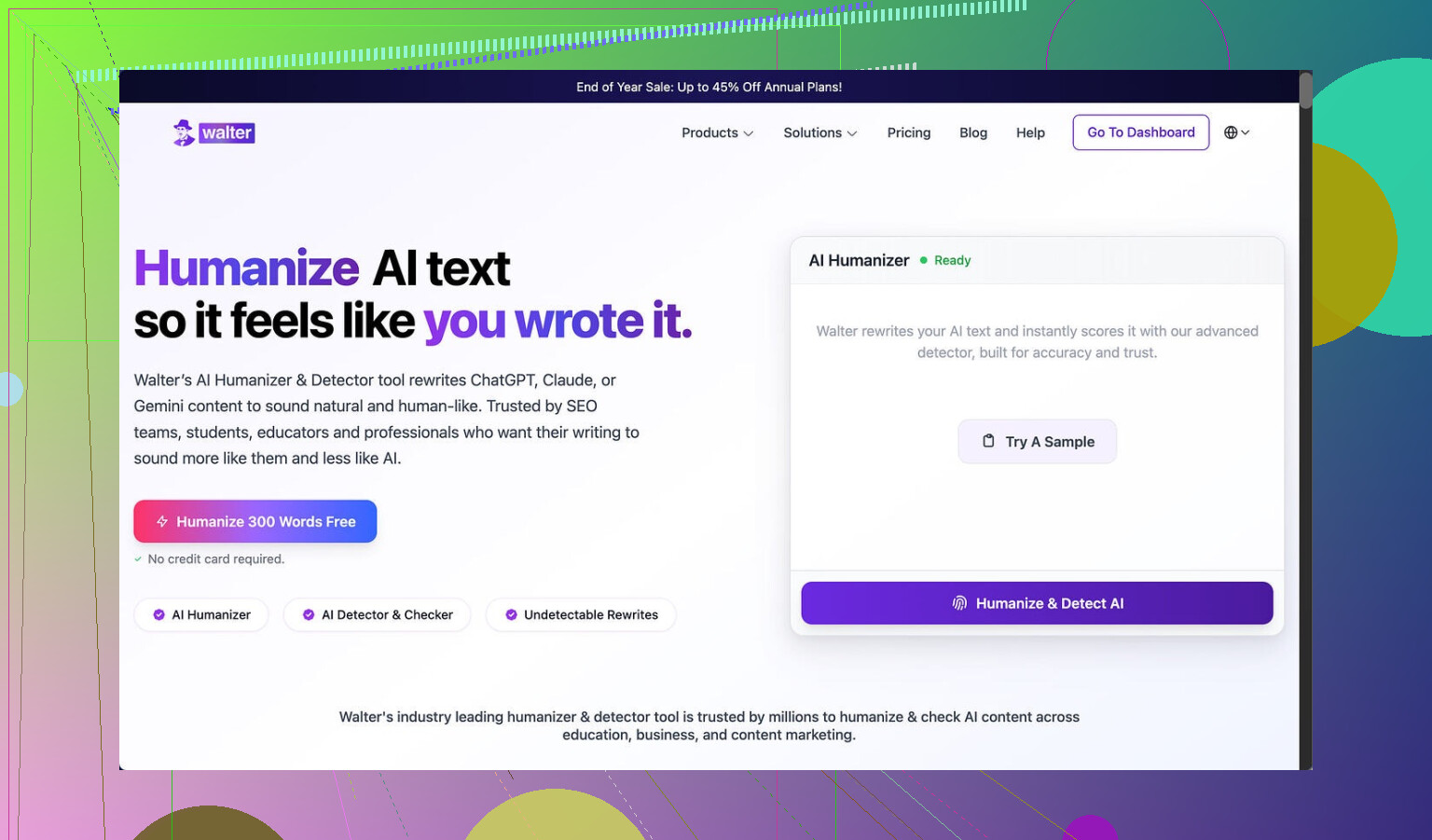
I spent an afternoon messing around with Walter Writes AI, mostly to see if it could slip past the usual AI detectors without turning the text into nonsense.
I used the free tier, which only gives you the Simple mode. No Standard. No Enhanced. So this is the bare minimum version of the tool.
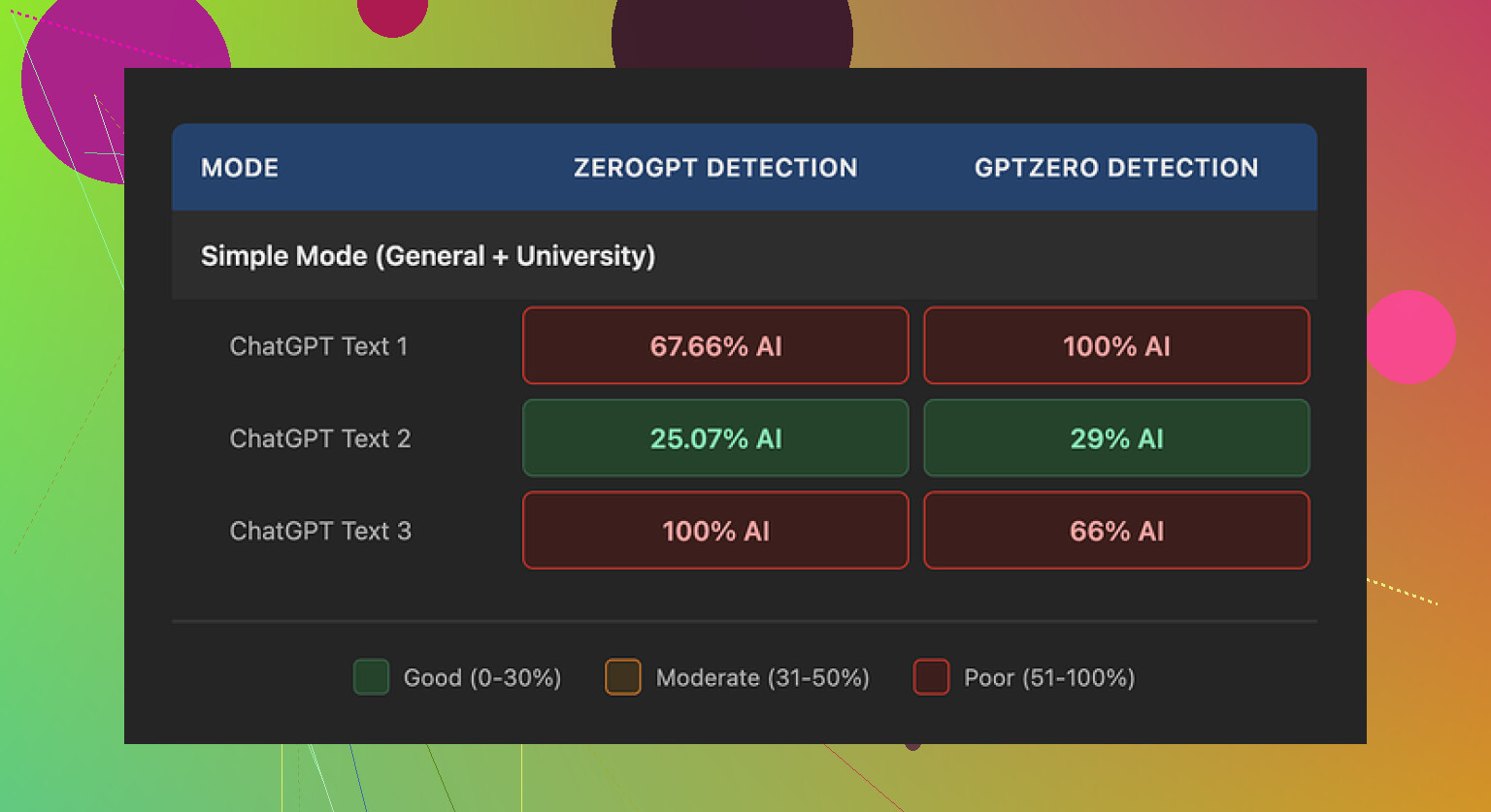
I ran three samples through it, then checked them on GPTZero and ZeroGPT:
Here is what happened.
One sample came out surprisingly strong.
GPTZero said 29 percent AI.
ZeroGPT showed 25 percent AI.
For a free-level rewrite, that is better than a lot of “AI humanizer” tools I tried earlier. Most free tools get flagged almost entirely.
Then the other two samples went straight off a cliff.
Both got hit as 100 percent AI on at least one of the detectors. No nuance, full red bar. So the performance was not stable at all. Same site, same mode, same text style, completely different detection results.
Now the style issues.
After reading the outputs side by side, I started noticing patterns fast:
• It kept throwing in semicolons where a normal writer would drop a comma or split into two sentences. It made the paragraphs feel stiff.
• In one sample, the word “today” showed up four times in three sentences. No human writes like that without catching it on a reread.
• Parentheses spam. Things like “(e.g., storms, droughts)” repeated across the text, and the overall structure felt like something straight out of a textbook generator. Same phrasing, same structure, like a template.
If you are trying to pass detector checks, repeated patterns and odd punctuation habits do not help. They stand out on a quick skim.
On pricing, here is how it looked when I checked:
• Starter plan: 8 dollars per month on annual billing, 30,000 words.
• Unlimited plan: 26 dollars per month, but each individual submission is capped at 2,000 words. So long articles need to be chopped up.
• Free tier: total of 300 words, which you burn through in a few quick tests.
What made me pause more than the price was the refund and data side.
The refund policy leans hard into chargeback threats and legal language. It reads more like someone arguing with payment disputes than a normal SaaS refund page.
On top of that, there is no clear, plain explanation of how long they keep your submitted text, where it sits, or what they do with it afterward. For tools that handle full articles, this matters. Especially if you write for clients or work with anything sensitive.
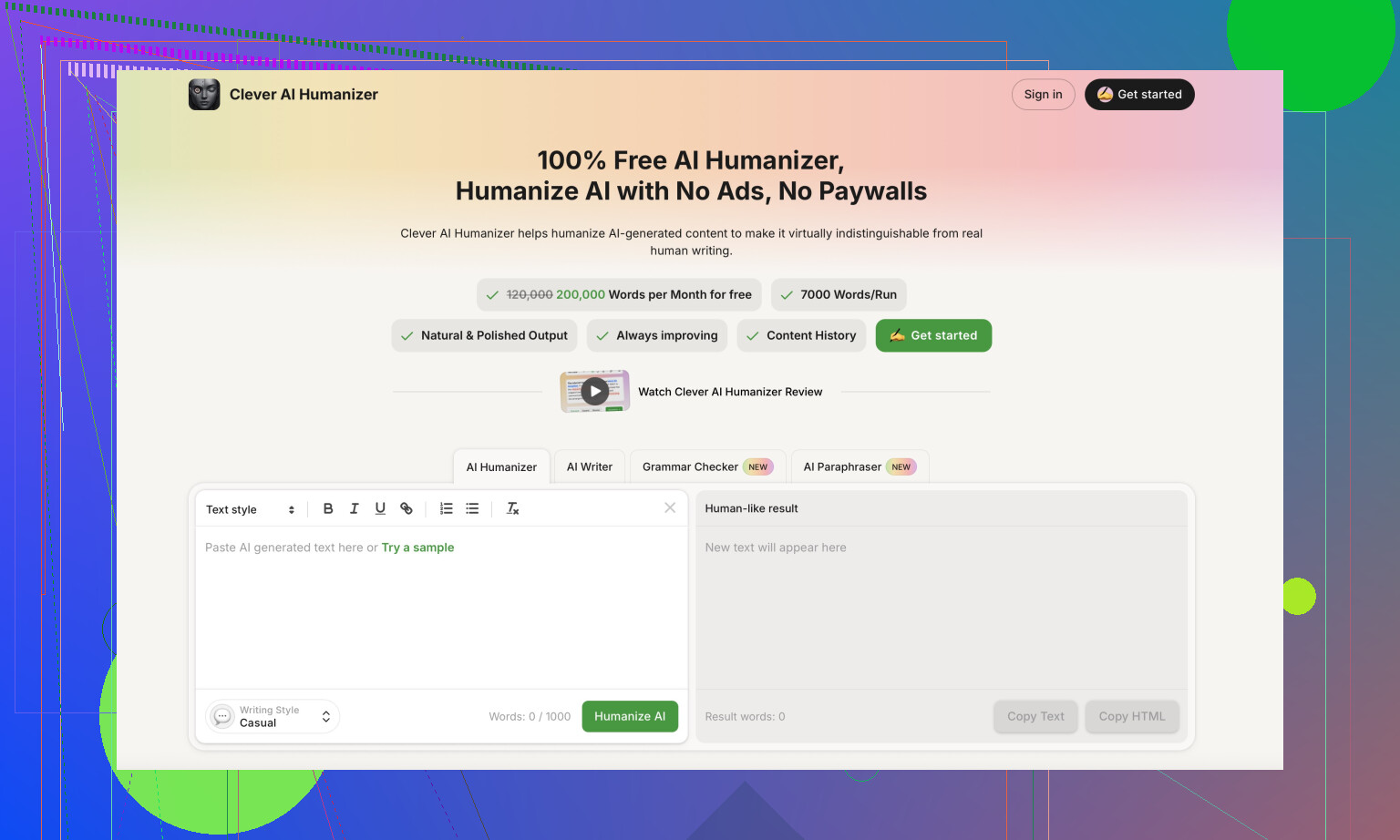
While testing other tools, I kept circling back to Clever AI Humanizer because the output felt closer to how I, or most people, write when we are not overthinking it.
Here is the one I ended up sticking with most of the time:
For anyone who wants walkthroughs or user feedback, these helped:
Humanize AI (Reddit tutorial, step by step use case):
https://www.reddit.com/r/DataRecoveryHelp/comments/1l7aj60/humanize_ai/
Clever AI Humanizer review on Reddit, with people showing their detector results:
https://www.reddit.com/r/DataRecoveryHelp/comments/1ptugsf/clever_ai_humanizer_review/
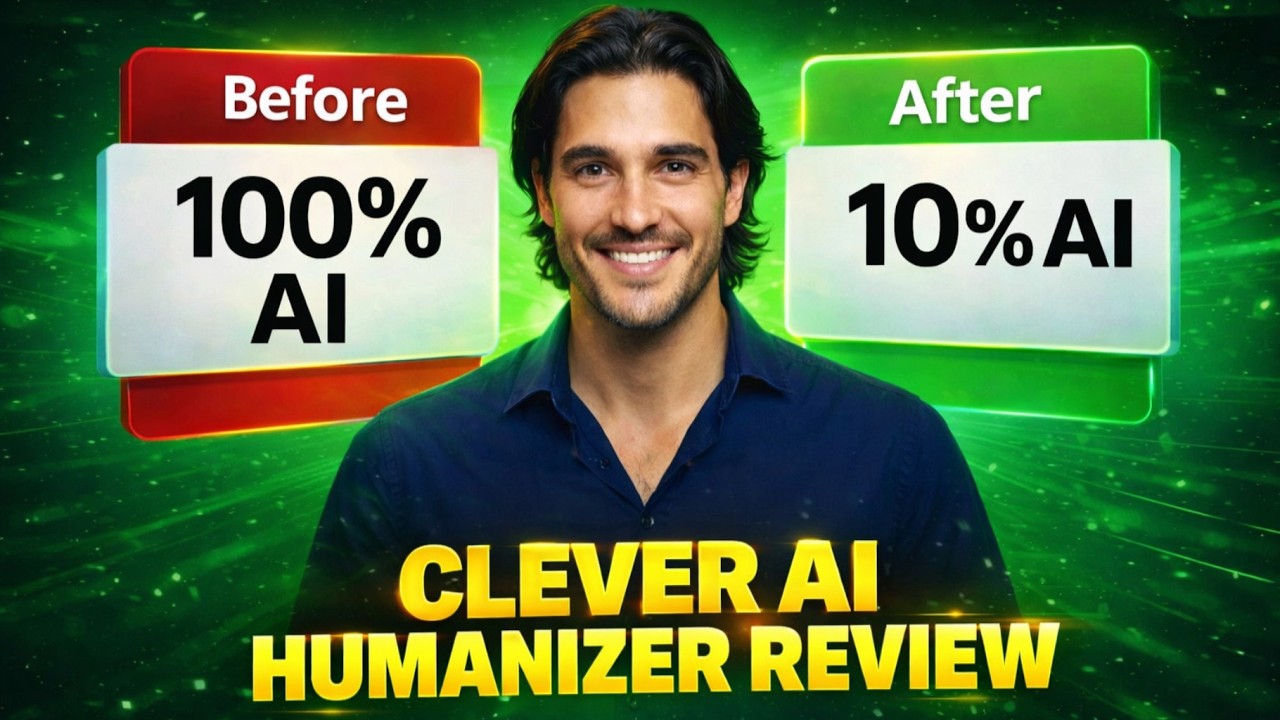
YouTube review with screen recording of tests and outputs:
7 Likes
Short answer from what I have seen using it and poking around their site: the “real user” angle looks pretty curated, and some of it feels AI touched if not fully AI written.
A few concrete points.
-
Tone and structure of the reviews
A lot of the testimonials use the same style. Same sentence length. Same type of praise. Same vague claims like “helped my workflow” without details.
Real unpaid users usually mention specifics.
Things like “I used it on my blog about X, it helped with Y, here is what annoyed me.”
Their reviews often skip that kind of detail. That is a red flag. -
Lack of verifiable profiles
I checked names and “titles” from some of the testimonials. I could not find matching LinkedIn profiles or sites for several of them.
If a tool is new, you expect a few light reviews. You still expect at least some people to be findable.
When multiple names look generic and do not match public profiles, you should treat them as marketing copy, not real social proof. -
Language patterns vs their own outputs
This is where I slightly disagree with @mikeappsreviewer. They focused more on detection tests and writing quirks inside the core product.
If you compare the testimonial text to content Walter Writes AI itself produces, you see similar habits.
Weird punctuation choices. Overuse of certain phrases. Overly “safe” corporate tone.
That does not prove the reviews are generated, but it points to a strong house style at minimum, if not direct AI help. -
No clear “collected from X platform” tags
Tools that rely on real feedback often show “from G2,” “from Trustpilot,” or embed screenshots.
Walter Writes AI mostly shows clean text blocks. No date. No platform badge. No rating source.
If a company has nothing to hide, it will usually brag about the source. -
Mixed info you saw online makes sense
Some people report decent performance. Others run into the same problems @mikeappsreviewer described, like unstable detection results and odd phrasing.
When product quality feels this uneven, but the testimonials stay overly glowing and generic, it suggests strong filtering.
So even if they started with real comments, there is a good chance they prune, rewrite, or “optimize” them.
What you can do right now:
• Ignore on-site testimonials. Treat them as ads, not evidence.
• Look for third party reviews on Reddit, YouTube, niche forums, and comparison blogs. Those show the rough edges.
• If you want a humanizer tool with more visible user feedback, look up “Clever AI Humanizer review” and check the Reddit and video tests people share. That gives you screenshots, detection scores, and real workflows, not short marketing blurbs.
• For Walter, if you still want to try it, use the free tier, run your own tests on multiple detectors, and see if it fits your needs instead of trusting their “reviews.”
So my take. Walter Writes AI likely mixes some real input with strong curation and a marketing polish layer. I would not treat their testimonials as reliable user evidence. Use outside reviews and your own trials instead.
Short version: I’d treat Walter’s “real user” reviews as marketing copy first, social proof second.
Couple things I noticed that line up partly with what @mikeappsreviewer and @viajeroceleste said, but from a slightly different angle:
-
Consistency of the voice
The testimonials read like they were written by the same copywriter having a productive afternoon. Same rhythm, very similar adjective choices, same kind of “This boosted my productivity and made my life easier” phrasing. Even when different “roles” are listed (blogger, marketer, agency, etc.), they all talk in the same polished tone. Real people are way messier. -
Lack of friction
Nobody mentions anything annoying. No “I wish it had X feature,” “UI is a bit clunky,” or “pricing is a stretch but I kept it anyway.” That’s not realistic. Even people who love a tool usually toss in one or two gripes. The absence of any friction reads like curated or rewritten feedback. -
Reuse of product language
Some reviews literally mirror wording from their own feature sections. When a “user” uses the same phrases as the sales page, that’s a tell. Either heavily edited testimonials or straight up invented around a theme like “great for workflow” or “saves time for content creators.” -
Pattern vs product output
Where I don’t fully agree with @viajeroceleste is the idea that similar punctuation quirks = probably AI generated testimonials. That overlap could just mean they have one content person writing everything with a strong house style. But when you stack that with the generic tone and lack of verifiable identities, the overall picture still leans toward “curated, maybe AI-polished” rather than raw user reviews. -
No external anchors
No timestamps, no “pulled from G2 / Trustpilot” tags, no screenshots of real comments. Just clean text blocks. That doesn’t prove anything by itself, but in 2025 most legit SaaS tools brag about the platforms they’re rated on if they have them.
My guess:
They probably started with some real feedback, then heavily cleaned it up, merged it, and filled gaps with copy written in-house, possibly with AI help. So the “real user” angle is not outright fake, but it is not something I’d rely on to judge the tool.
If you care whether a humanizer actually passes detectors and still reads like something you’d write, the on-site testimonials are close to useless. Do what @mikeappsreviewer did in a different way: grab a free tier, hammer it with your own samples, and run those through GPTZero, ZeroGPT, and maybe one or two others. That will tell you a lot more than “John, Content Strategist” ever will.
Also, if you’re comparing tools, look at stuff with more transparent user feedback. Clever AI Humanizer shows up in a lot of third party tests and Reddit threads with actual screenshots and detector scores. That kind of noisy, imperfect feedback is usually a better signal than a spotless wall of praise with zero sources.
TL;DR: assume Walter’s testimonials are curated, partially rewritten, and possibly AI-assisted. Useful for seeing how they want to be seen, not for how the tool actually behaves in the wild.