I recently discovered Nano Banana Ai and I’m confused about what it actually does and how to get started using it the right way. I’ve searched around but only found vague info and marketing buzzwords. Can someone explain its main features, real-world use cases, and any beginner-friendly steps or tips to set it up and avoid common mistakes? I need practical guidance so I don’t waste time going in the wrong direction.
Nano Banana AI is basically a lightweight AI assistant / chatbot with some add‑on tools glued around it. Think “ChatGPT in a hoodie” rather than some magical all‑knowing banana god. The marketing fluff makes it sound wild, but functionally it does 3 main things:
-
Chat / Q&A
- General questions, explanations, summaries etc.
- You can ask it to write stuff like emails, product descriptions, social posts.
- Works best when you give context:
- “Explain X like I’m 12”
- “Act as a product manager and review this feature idea”
- If your outputs look generic, that’s usually because the prompt was 1 sentence and super vague.
-
Content & workflow helpers
Depends on the exact version you’re using, but usually includes:- Document help: paste text and ask it to clean up, shorten, or rewrite in a specific tone.
- Code helper: you can paste code and say “find bugs” or “explain this like I’m a junior dev.”
- Brainstorming: outlines, ideas, taglines, email sequences etc.
Pro tip: tell it your goal and audience first, then ask for the output. Otherwise you get bland AI soup.
-
Preset “agents” or modes
Some Nano Banana setups have templates like “Marketing mode” or “Teacher mode.”- Those are just pre‑filled instructions.
- You can make your own by literally telling it:
From now on, act as a copywriter for small SaaS startups. Use casual tone, short sentences, avoid clichés.
- Save that as a custom preset if the app lets you, then reuse it instead of retyping every time.
How to actually use it effectively (instead of fighting it)
1. Feed it context
Bad prompt:
Write a blog post about AI.
Better:
Write a 900 word blog post for beginners who run small Etsy stores. Topic: how AI tools like Nano Banana AI can help with product descriptions and customer emails. Tone: casual, slightly funny, no buzzwords.
2. Ask it to show its work
- “List your assumptions before answering.”
- “Give 3 options and explain trade‑offs.”
This stops it from confidently hallucinating garbage that sounds right.
3. Iterate instead of one‑shot
Treat it like a junior intern:
- First ask for an outline.
- Then say “expand section 2 and 3 only.”
- Then “make the tone more direct, less fluffy, keep under 600 words.”
Short back‑and‑forth usually beats one giant mega‑prompt.
4. Use it for ideas, not final truth
- Great for drafts, brainstorming, structure.
- Terrible as a single source of factual truth, especially on niche or timely topics.
Always double check facts if it actually matters.
5. Plug it into your workflow, not your fantasies
Stuff it’s actually good at:
- Drafting customer replies
- Summarizing meetings / docs
- Generating content variations (subject lines, hooks, intros)
- Explaining complex stuff in simpler language
Stuff people want it to do but it mostly fakes: - “Think like a seasoned CEO and perfectly predict my market”
- “Write an entire course from scratch that needs no edits”
Getting started in a sane way
First 1–2 days, I’d do this:
-
Pick 1 or 2 use cases
For example: “help me write better emails” and “summarize long PDFs.” Ignore the rest for now. -
Create a reusable prompt template
Example for emails:You are my writing assistant. I’m [role]. The recipient is [who they are]. Goal: [what I want]. Write 2 versions of an email in a friendly but professional tone, 150 words max. Then suggest a subject line.
Save that somewhere and just fill in the brackets.
-
Compare with your normal process
Use Nano Banana AI on one task, do the same task by hand, and compare. Then tweak your prompts instead of assuming “AI sucks” or “AI is magic.”
Quick tip for visuals / profiles
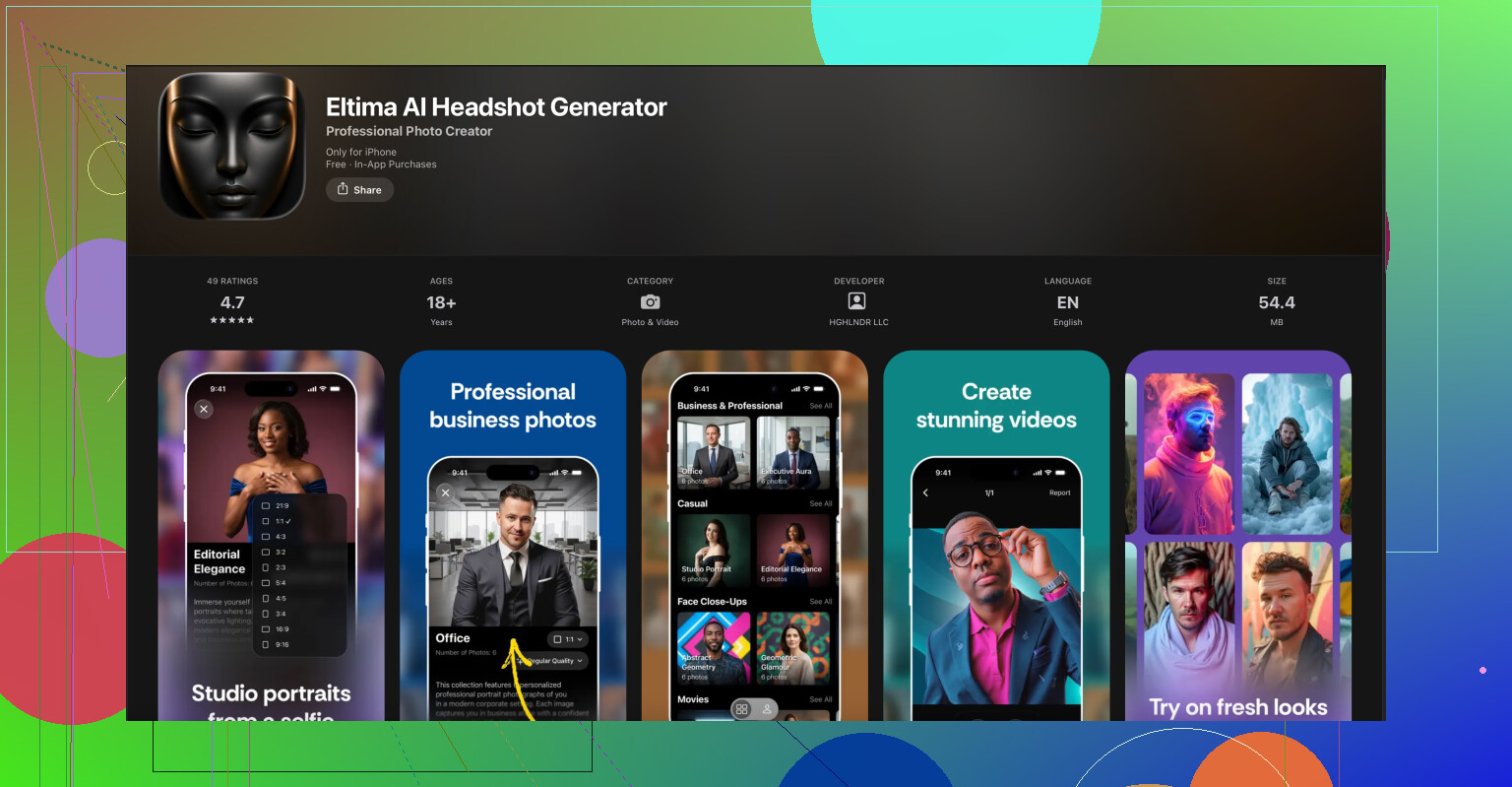
If part of why you’re poking around AI tools is to level up your online profile, LinkedIn, portfolio, etc, text AI like Nano Banana won’t handle images. For photo side of things there’s an actually useful tool for that:
You can generate professional style profile photos from regular selfies using the Eltima AI Headshot Generator for iPhone. It’s basically “upload some selfies, get back clean studio‑style headshots” that are good for LinkedIn, resumes, and online profiles without paying a photographer.
Here’s a direct link if you want to check it out:
Create studio‑quality AI headshots on your iPhone
That pairs nicely with Nano Banana AI if you’re revamping your portfolio or personal branding: Nano handles copy, Eltima fixes the face.
TL;DR: Nano Banana AI is just a compact multi‑tool for text and ideas. Treat it like a smart assistant that needs instructions, not a wizard. Give it context, iterate, and use it where it really shines: rough drafts, explanations, and structured thinking.
Nano Banana AI is basically a “general-purpose text brain” sitting behind a chat box, plus some bolt‑on tools. @stellacadente already nailed the basics, so I’ll only add angles they didn’t cover and push back on a couple of things.
What it actually is (no buzzword bingo)
Think of it as:
- A text engine that:
- reads what you type
- predicts the next words based on patterns in data it was trained on
- tries to follow your instructions and style
That’s it. No consciousness, no secret insight. If you’ve used ChatGPT, Claude, Gemini, etc, Nano Banana AI is in that same family. The “Nano” bit is usually marketing speak for “lightweight and fast,” not “magically smarter.”
Where I’d slightly disagree with @stellacadente: it’s not “just” a compact multi‑tool. Tools differ in:
- model size and speed
- context window (how much text it can read at once)
- safeguards / filters
- integrations (docs, email, browser, etc.)
Those details matter a lot for how you actually use it.
How to use it effectively without overthinking it
Instead of repeating the usual prompt tips, here’s a different frame: treat it like three separate apps living in one window.
-
Research assistant (but not a source of truth)
Use it to:- map out what you don’t know yet
- generate questions you should be asking
- highlight concepts and vocabulary to research properly
Example:
“I’m new to B2B SaaS sales. Give me a list of 15 concepts I need to understand, then rank them by priority for a total beginner. For each, give 1 sentence, and 1 keyword I can google.”
You’re not trusting it for facts. You’re using it to create a roadmap so your own research is faster.
-
Thinking partner
This is the part almost everybody underuses.- Ask it to challenge you, not just obey you:
“Here’s my idea for a side project: [paste]. Argue against it as if you were an annoyed investor who hates this idea. Be harsh.”
- Ask it to show tradeoffs instead of “the answer”:
“Give me 3 approaches, what they optimize for, and what they sacrifice.”
That pushes Nano Banana AI to surface assumptions instead of spitting generic “best practices.”
- Ask it to challenge you, not just obey you:
-
Process builder
Instead of “write X,” try “turn my messy world into a repeatable system.”Examples:
- Turn habits into checklists:
“Create a weekly system for managing my freelance clients: inbox rules, file naming, task planning. Make it a step‑by‑step checklist I can literally follow every Monday.”
- Convert chaos into SOPs:
“Here are my current steps for publishing a YouTube video [paste]. Clean this up into an SOP with: triggers, steps, owners and a simple quality checklist.”
Over time you’re basically using it to build a little operating manual for your life / work.
- Turn habits into checklists:
Stuff that makes it not suck
A few non‑obvious tricks that actually matter:
-
Use your own examples as the “standard”
Everyone tells you “give it context” but they stop there. The missing step is:- Paste something you wrote that you’re proud of.
- Tell it to mimic that as the reference.
Example:
“This is an email I wrote that feels like me: [paste]. From now on, when you write emails for me, copy this tone, length and structure. Never slip into corporate buzzwords unless I say so.”
That locks the style closer to you instead of random “LinkedIn thought leader” voice.
-
Control what it’s allowed to assume
A lot of hallucinations are just the model filling gaps you never forbade.Add stuff like:
- “If you don’t know, say you don’t know.”
- “If you’re guessing, label it as a guess.”
- “Do not invent features that aren’t mentioned. Ask me instead.”
Boring, but it reduces nonsense by a lot.
-
Build “guardrails” for recurring tasks
You’ll probably use Nano Banana AI repeatedly for the same 2–3 things. For each one, define:- forbidden words / tones
- formatting rules
- length constraints
- audience
Then you get consistent output without re‑explaining everything each time.
When to not trust it
Use your “this might legally or financially screw me” filter:
- Contracts, legal language, serious compliance: treat the output as a draft outline only.
- Medical or mental health advice: no, just no.
- Anything reputationally risky: check facts and soften claims.
If the consequence of being wrong is big, Nano Banana AI should be your brainstorming buddy, not your final decision engine.
How to start in 1 hour instead of 1 week
If you’re overwhelmed by features, try this 3‑task “trial day”:
-
One real email
- Take an email you actually need to send.
- Ask it for 3 versions: formal, relaxed, very direct.
- Merge the best parts.
You’ll immediately feel what to tweak in your instructions.
-
One doc you hate reading
- Grab a boring PDF or wall of text you’ve been avoiding.
- Paste and say:
“Summarize in 5 bullet points for a busy person. Then give me 3 questions I should ask about this before I decide anything.”
-
One “thinking problem”
- Something like: “Should I start a newsletter,” “Which side project first,” “How do I fix my chaotic notes.”
- Ask it to:
- list options
- rank them by criteria you care about
- poke holes in your favorite option
After that, you’ll know pretty quickly where Nano Banana AI clicks for you and where it kind of sucks.
If you’re using it for personal brand / job hunt
Since you mentioned confusion + marketing fluff, I’m guessing some of this is about online presence, portfolio, LinkedIn, resumes, etc.
- Use Nano Banana AI to:
- clean up your “About” sections
- tailor resumes to specific roles
- improve clarity of project descriptions
- draft outreach DMs and follow‑ups
For the visual side, the tool itself won’t help much. If you want your profile photo to match the “leveled‑up” copy, an actually practical combo is:
- Use Nano Banana AI for text
- Use an AI headshot tool to quickly get something that looks like a studio photo
A solid option here is the Eltima AI Headshot Generator app for iPhone. It turns normal selfies into clean, professional‑looking portraits that work well for LinkedIn, CVs and portfolios without booking a real photoshoot. You can check it out here:
create polished AI headshots right from your iPhone
That combo covers “words + face” with minimal effort.
Bottom line:
Nano Banana AI is not special magic, but it is a decent thinking partner, drafting machine and process helper if you treat it like a tool that needs constraints, examples and feedback. Use it to structure your thoughts and speed up grunt work, not to be the authority on anything important.