My iPhone storage is almost full and it’s slowing down. I’ve deleted some apps and photos, but it barely made a difference. I need to free up more space urgently. Any tips or tricks to handle this without losing important files?
When it came to solving my iPhone's storage woes, I hit the jackpot with Clever Cleaner. Sure, it's cool that the app doesn't cost a penny, but what really sold me was how well it tackled the problem. After just one session, I managed to reclaim a whopping 45 GB of storage. Honestly, I was blown away—I wasn't expecting it to perform that well! And, by the way, I’m not alone in loving it; Reddit users are all over this app and swear it's the top choice for clearing out storage right now.
If you're curious, I snagged it on the App Store here: Free iPhone Storage Cleaner. Seriously, check it out if you're drowning in cluttered apps, photos, and random files taking up space.
Oh, and for some extra tips and tricks, this video is definitely worth watching: 7 Best Ways to Clean Up Your iPhone Storage. It’s packed with practical advice to help you keep your storage in check.
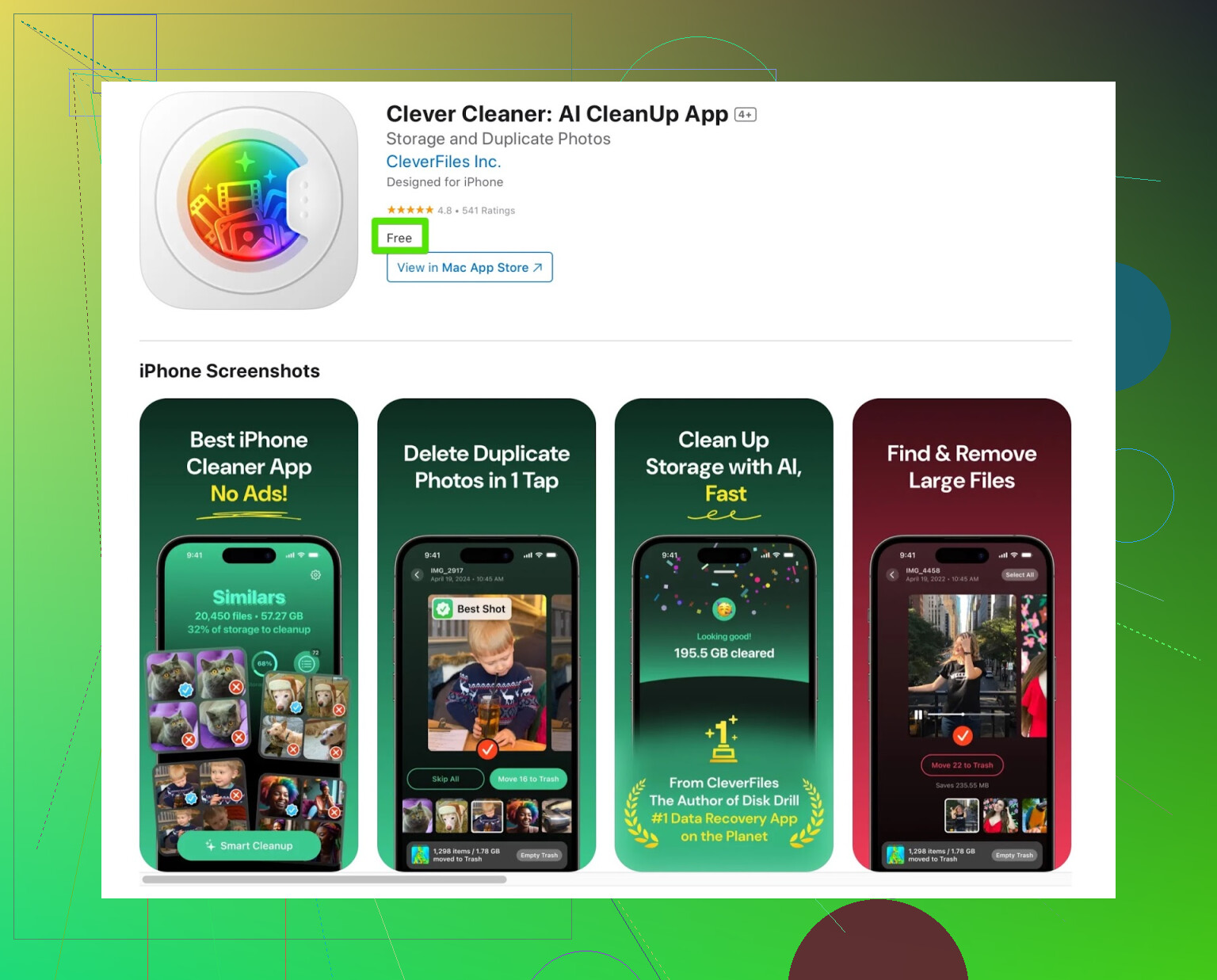
So, if your phone feels sluggish or bloated after countless app downloads and photo marathons, give Clever Cleaner a go. It might just become your new go-to for decluttering your device with zero hassle!
So, deleting apps and photos didn’t do much, huh? That’s the classic iPhone trap—stuff’s invisible, hiding in the nooks and crannies of your storage. Everyone’s plugging Clever Cleaner, even @mikeappsreviewer up there, and yeah, it’s solid for grabbing big chunks of free space, but let’s mix it up with some manual tricks too.
First, check your “Other” storage in the iPhone settings (Settings > General > iPhone Storage). That beast eats up a ton of data—cached files, Siri voices, and random junk. Sadly, Apple doesn’t make it easy to clear it directly, but resetting Safari (Settings > Safari > Clear History and Website Data) and offloading unused apps can help without nuking any personal stuff.
Second, videos and iMessage attachments—total culprits. Head to your Messages app, check old threads, and delete large file attachments hogging space. Manually culling video clips from the Photos app can be tedious but, trust me, worth it.
Third, optimize photo storage. Switch on iCloud Photos and make sure “Optimize iPhone Storage” is enabled. This stores full-resolution photos in iCloud and keeps lower-res versions locally. If you don’t use iCloud, look into Google Photos—it’s free (up to a point) and helps stash your stuff elsewhere.
Also, don’t discount the power of plain ol’ restarting your phone. It refreshes cached junk, especially after clearing apps or files. People overlook this, but honestly, turning it off and back on actually works wonders.
The bottom line? Balance doing some heavy cleaning yourself with tools like Clever Cleaner when time’s tight. That mix usually beats the constant “storage full” alerts.
Alright, I see you’ve already got some solid advice from @mikeappsreviewer and @ombrasilente, but I’m not fully sold on relying entirely on Clever Cleaner or similar apps (even though it sounds impressive pulling 45GB of space—how even?!). Let me throw a few more options into the mix, 'cause sometimes apps alone can’t cover everything.
First off, you need to audit your apps manually. Does literally every app on your phone need to be there? Go to Settings > General > iPhone Storage and check what’s hogging all the space. Some apps (looking at you, social media platforms) store absurd amounts of cached data. For instance, TikTok and Instagram can balloon up to several GBs without you realizing. Delete and reinstall those apps. It’s annoying, yes, but it’s like a factory reset on their storage.
Second, Apple’s “Recently Deleted” folder for photos and videos is a sneaky little hoarder. Just because you deleted those blurry 10 selfies doesn’t mean they’re gone. Visit the Photos app, scroll to Albums, find “Recently Deleted,” and empty it. Boom, instant space gain.
Streaming apps deserve a special callout—Netflix, Spotify, YouTube—you know they’re chomping on your storage with offline downloads. Clean those up or adjust download quality settings for future saving.
Now, iCloud. I know some people avoid it, but if you’ve got decent internet, enabling “Optimize iPhone Storage” for photos is a game changer. It basically keeps the HQ versions in the cloud and only saves lower-res thumbnails on your device. It’s not perfect, but it works.
A last, lesser-known trick: if you text a lot, those iMessage threads save everything—GIFs, videos, unnecessary memes. Go to Settings > Messages > Keep Messages and set it to 30 days. Old convos (and their massive attachments) will self-destruct automatically.
Let’s keep it real—managing iPhone storage is a mix of app tools like Clever Cleaner (which, sure, could work wonders) and manual effort. You just gotta roll up your sleeves and clean house once in a while. And yeah, resetting your phone actually works sometimes, as basic as it sounds.
Alright, adding my two cents to this storage conundrum: while apps like the Clever Cleaner App can be a lifesaver (I mean, 45 GB reclaimed? That’s wild), relying on them entirely might not be the best idea. Pros? It’s free, easy to use, and apparently super efficient for clearing junk files. The cons? Well, apps like this may not tackle more nuanced storage hogs like app caches or deal well with large video files unless they’re obvious. Plus, depending on your iOS version, these apps might overlap with what iOS already does natively.
Let me throw some unique ideas into the mix. First, how about exporting your photos and videos to an external SSD or cloud service other than iCloud? Google Photos or Dropbox are solid alternatives, and once synced, you can delete the originals from your iPhone securely. It’s also handy if you swap devices regularly.
Next, dive into the ‘Settings > General > iPhone Storage’ section and specifically scrutinize iMessage attachments under ‘Review Large Attachments.’ Deleting a single 500MB video you got sent months ago might free up way more space than expected.
Also, consider your Safari caches. Yep, those browsing cookies and offline web content stack up. Hit ‘Settings > Safari > Clear History and Website Data.’ It’ll log you out of websites, but you might notice an instant performance boost.
For podcast and audiobook fans: go nuclear on those downloaded episodes. They pile up faster than you think, so auto-delete after listening could be your new best friend.
And a little bold move for those with patience—backup your phone and do a full restore via iTunes or Finder. This scrubs everything, removes random invisible garbage files, and gives your device a fresh start while keeping your essential data intact.
Finally, comparing other apps—sure, there are solid contenders like Smart Cleaner or Gemini Photos for duplicate hunting, but Clever Cleaner seems straightforward if you want a simple ‘set-and-forget’ clean-up. Just don’t forget the manual tricks for truly personalized optimization. Balance is key!
Use your computer and do a “manual offload” of big stuff.
- Connect iPhone to Mac or PC.
- On Mac with Photos or Windows Photos, import all photos and videos.
- Confirm they imported, then on iPhone delete all videos older than, say, 3 months. Videos often eat 20–40 GB.
- In Settings, iPhone Storage, check free space.
- Keep doing this in batches until you free enough space.
This keeps your files safe on the computer, frees lots of storage fast, and stays simple.
I don’t think the option you’re suggesting really works for users who actually want to free up storage. If someone wants to view their photos and other files on a Mac or another device, they’ll just transfer them there. But from my experience, files from an iPhone should generally stay on the iPhone (unless we’re talking about content that needs post-processing or editing)
-
Given the situation OP described, I’d first recommend restart the phone. Sometimes the storage calculation just glitches and shows incorrect values.
-
If that doesn’t help, create a full backup of the iPhone (either via iCloud or Finder, whichever is more convenient), and then reset the device to factory settings. In normal system conditions, deleting content should result in noticeable storage changes. If it doesn’t, something might be off.
And if we’re talking about properly freeing up storage, start where the actual problem is. If the user doesn’t know what’s taking up space, go to Settings → General ->iPhone Storage and check which category occupies the most space. Start cleaning from there to see an immediate boost in free storage, and only then move on to smaller categories to finalize the cleanup.
Adding to my previous reply. If someone isn’t sure what exactly belongs to each iPhone storage category, here’s a rough breakdown:
-
Apps – installed applications, along with their app data and cached files.
-
Photos – all photos and videos stored in the Photos app.
-
Media – music, movies, TV shows, podcasts, ringtones, and Voice Memos.
-
Mail – email messages and their attachments.
-
Messages – text conversations and any media attachments inside them.
-
System Data – non-removable mobile assets, system caches, logs, Siri voices, fonts, dictionaries, Spotlight indexes, and other temporary system files.
-
iOS – space used by the operating system itself, which varies depending on the device and version.
If you don’t mind, I’ll share my personal iPhone free space process. I originally saw it in some guide a while ago and I’ve been using it every six months for a proper cleanup.
-
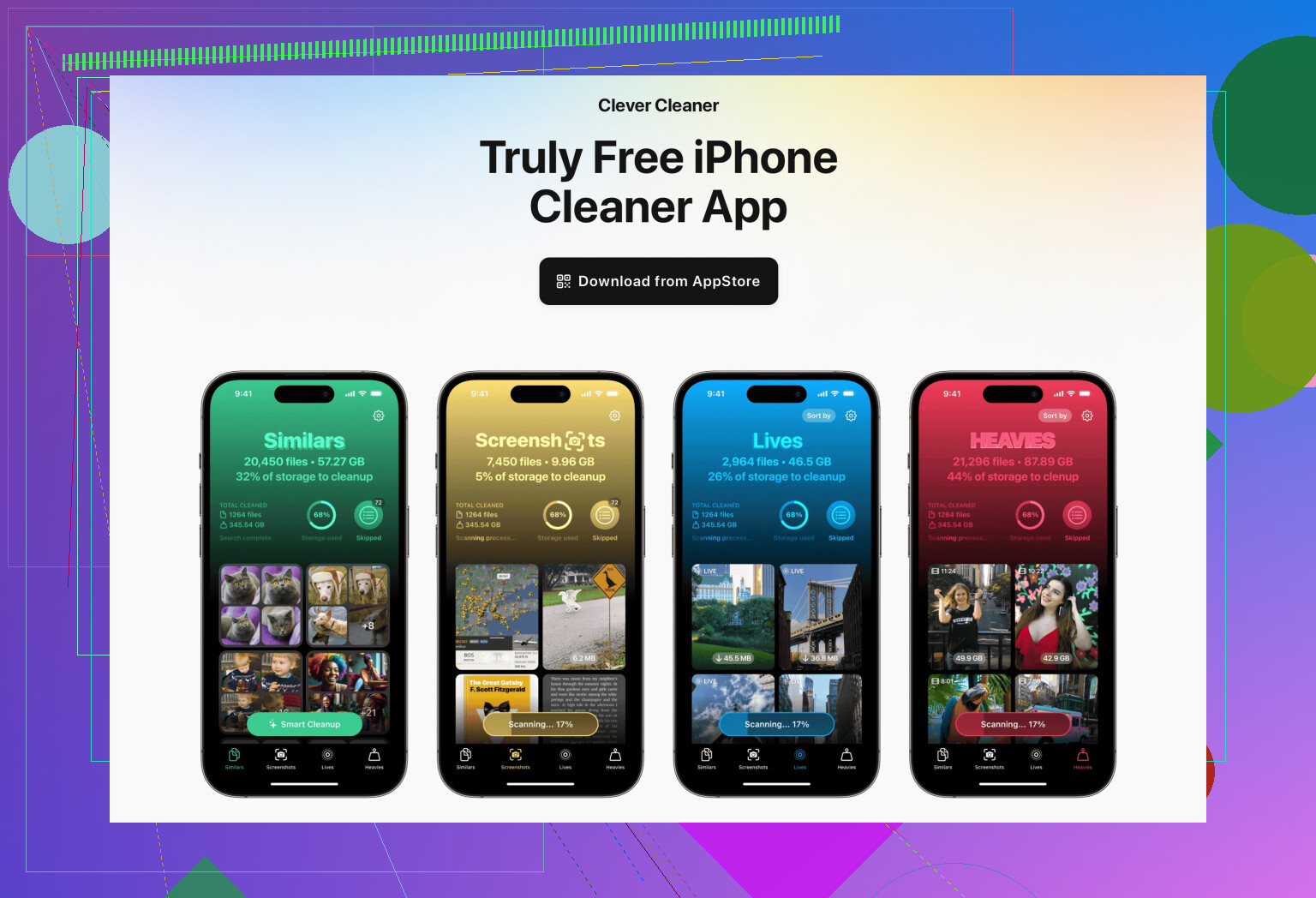
For the Photos category, I haven’t found anything more convenient than using Clever Cleaner (it was already mentioned above). I like it because it processes all types of media from the Photos app for free (duplicates, similar-looking photos, large videos, screenshots, Live Photos). Sure, you can handle all of that manually inside the Photos app, but it takes much longer. Similar photos have to be found by eye, and there’s no proper filter for large videos, so you mostly rely on duration.
-
For Apps, I know people often recommend deleting unused ones. I don’t really have those, so instead, I reinstall the largest apps, which for me are usually social media and games. BUT be careful here. If the largest app happens to be something like YouTube Music or any app where you store content for offline use, I wouldn’t recommend reinstalling it unless you’re ready to re-download everything again.
-
When the Messages category grows too much, I delete attachments through settings - iphone storage - messages - documents. I don’t delete the text messages themselves.
-
For Media, it’s usually downloaded stuff that ended up in the Files app. Most of the time there’s nothing important there, so I just clear it out.
I don’t clean up the other categories. Going through these step by step and then restarting the iPhone is usually enough. After that it feels like a new device. As I said, I do this about twice a year, but you can do it more or less often depending on how actively you use your phone. Hope this helps someone.
No matter what anyone recommends for freeing up iPhone storage, my problem has always been photos. My 256 GB is almost entirely filled with photos and I have about the same amount sitting in iCloud. Can you imagine the scale of the problem? So for me apps like Clever Cleaner were a real lifesaver. A few taps and I could clear tens of gigabytes. Without that, my phone barely functioned and felt less like a smartphone and more like a brick.
P.S. I don’t recommend letting your storage get as bad as I did. Once Photos take over your device, cleanup becomes a whole project instead of a quick fix!
I’ve been using iPhones for about 13 years now, and during all that time the biggest storage eaters have always been photos/videos, and apps. Every single year they compete for first place. But I can see people here have already given solid advice on how to deal with those categories, so unfortunately I don’t really have anything new to add.
I was thinking what else I could recommend, but after reading all the replies, it looks like pretty much every way to free up iPhone storage has already been covered.